Thursday, February 24, 2022

Meta Chestnutt in Tennessee, 1886-1888

The previous post ended with a question: If Meta Chestnutt grew up in a liberal, "digressive" Disciples environment in North Carolina in the 1860s and 70s, why did she hold conservative, "anti" views as a young adult and for the rest of her life?

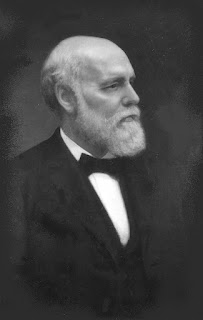
The most likely answer has everything to do with her time in Nashville, from 1886 until 1888. During her student days at the State Normal College, Chestnutt found herself in a thriving church environment. For example, she would have heard the the preaching and teaching of David Lipscomb (pictured here) and E. G. Sewell, co-editors of the anti-instrument and anti-society Gospel Advocate magazine, published from Nashville.

In 1870, Lipscomb realized he needed help in producing the Advocate. He asked Sewell to edit the magazine with him, and from that time until Lipscomb's death forty-seven years later, the two men worked together. Each was a powerful voice for the distinctive viewpoint of the emerging Churches of Christ. In addition to their teaching through the Advocate, the two leaders preached to thousands of people in Middle Tennessee and beyond. During those years, Sewell help to establish the Woodland Street Christian Church in East Nashville. He preached for the congregation for twelve years and for a time served as one of the church's elders. Lipscomb was also an active as a leader among Restoration Movement churches in and around Nashville. In 1891, he and James A. Harding would establish the Nashville Bible School, known today as Lipscomb University.[1] 

By the end of 1889, Lipscomb looked back over the past twenty years with pride: "In 1869 we had one church in Nashville with a membership of about 500. Now we have five churches and three promising missions with a membership of over 2,500 in the city."[2] The five congregations Lipscomb mentioned were the old first church, established in the mid-1820s, with its brand new building on Vine Street; North Nashville Christian Church (organized in 1882); Woodland Street in East Nashville (1883); and the Foster Street and South Nashville congregations, both established in 1887.[3]

Notes

[1] On David Lipscomb, see H. Leo Boles, Biographical Sketches of Gospel Preachers (Nashville: Gospel Advocate Company, 1932), 243-47; and Robert E. Hooper, "Lipscomb, David (1831-1917)," in Encyclopedia of the Stone-Campbell Movement, 480-82. On E. G. Sewell, see Boles, 238-42; and David H. Warren, "Sewell, Elisha Granville (1830-1924)," in ESCM, 680-681. See also David L. Little, "Gospel Advocate," in ESCM, 361-63. 

[2] "From the Papers," Gospel Advocate 31 no. 47 (November 20, 1889), 737.

[3] "History of the Christian Church in Nashville," Daily American (Nashville), (January 26, 1890), 10.

Monday, February 21, 2022

Stone-Campbell Churches in North Carolina and Meta Chestnutt

In his history of the Restoration Movement in North Carolina, Charles C. Ware reveals that during the decades following the Civil War, Disciples in the Tar Heel State did not side with the emerging Churches of Christ. That is to say, they did not oppose instrumental music in worship nor the various para-church organizations like the Disciples' American Christian Missionary Society. For example, in describing the opposite side of the division, Ware wrote:

An ultra conservative group of Disciples, who opposed use of musical instruments in the Churches, and the functioning of missionary societies in the Church, developed under the leadership of Tolbert Fanning and David Lipscomb, both of Tennessee. The strength of this group is mainly in Tennessee and Texas.  . . . They were aggressive in blighting effectually every church of Christ, where they could prevail. . . . The cause of liberal and progressive Christianity received many a hard blow from this source, and its growth was materially retarded.[1]

Clearly, then, Meta Chestnutt grew up among congregations that did not object to instruments in worship and that supported regional and national church societies. Yet, when she wrote to supporters of her mission in Minco in 1897, she set out correct a recent report about her.

I learn that my name has appeared as holding an office in some society. I hope I shall be permitted to state that I do not belong to any religious society of any name or order and never did; also that the Apostles constitute the board and Jesus Christ the President of the only  institution to which I belong, or to which I ever expect to belong.[2]

In addition to its classic anti-society statement, the same newsletter indicates that, among other topics, Chestnutt had recently led a Bible study with the title "Reasons for Discarding the Organ from Worship."[3] Not only anti-society, she was also anti-instrument. What had happened?

Notes

[1] Charles C. Ware, North Carolina Disciples of Christ: A History of Their Rise and Progress, and of Their Contribution to Their General Brotherhood (St. Louis: Christian Board of Education, 1927), 120-121.

[2] Meta Chestnutt, "1897," Meta Chestnutt Sager Collection, box 3, folder 35.

[3] Ibid.

Sunday, February 20, 2022

Women Teachers on the American Frontier

Women teachers who went to the American frontier in the nineteenth century quickly gained a new identity. Often, they experienced a radical contrast between their status in the schools where they had trained compared to their newfound status in the West. Back east, a teacher in training was only one among many students, all of them striving to excel in their studies and to gain the approval of their professors. But in the West, a newly-minted teacher soon realized that she was the best-educated, most eloquent person in the community. For example, Asenath Hammond, a teacher from Maine who moved to Indiana, was surprised by her new and improved standing: "I never thought I was anything of a teacher until I came here and here they almost think I am perfection."[1]

Note

[1] Polly Welts Kaufman, Women Teachers on the Frontier (New Haven, CT: Yale University Press, 1984), 33.

Sunday, February 06, 2022

Origins of the State Normal College of Tennessee

Founded in 1875, the State Normal College of Tennessee was the result of a post-Civil War gift from George Peabody. Born in Danvers (now Peabody), Massachusetts, in 1795, he became an incredibly-wealthy merchant and international financier. (His one-time junior partner was Junius Spencer Morgan, father of J. P. Morgan. In fact, the House of Morgan was successor to the firm built by George Peabody).[1] In 1837, he had moved to London, a center of world banking. Alarmed by reports and personal letters sent to him at the end of the war, Peabody established a fund designed to enable the American South to rebuild and develop its educational system. In a letter he wrote to a friend in February 1867, he said it was "the duty and privilege of the more favored and wealthy . . . to assist those who are less fortunate."[2] He called together a board of sixteen American leaders, two of whom were General Ulysses S. Grant and Admiral David G. Farragut, and entrusted to them $1 million. The proceeds of the endowment were to be used "for the promotion and encouragement of intellectual, moral, or industrial education among the young of the more destitute portion of the Southern and Southwestern States of our Union."[3] In time, the board would determine that this meant the eleven states of the former Confederacy plus West Virginia. 

Notes

[1] Paul K. Conkin, Peabody College, 103.

[2] Ibid., 104.

[3] Ibid.

Wednesday, February 02, 2022

Tennessee's State Normal College, 1880-1887

Eben Stearns
During the years just before Meta Chestnutt arrived in Nashville, the State Normal College went through two moments of crisis. Both episodes, as they turned out, effectively strengthened the school. The first related to the near-constant concern of many institutions of higher learning: money. Since the founding of the college in 1875, the State of Tennessee, impoverished as a result of the Civil War, contributed nothing to it. The college was able to survive only because the University of Nashville, its parent institution, provided the facilities and the Peabody Education Fund covered virtually all of the operating costs. Under those conditions, the school could subsist, but it could not thrive and grow. In 1880, President Eben Stearns (pictured here) and Barnas Sears, the general agent for the Peabody Education Fund, visited Georgia and considered an offer from state leaders to bring the school to either Athens or Atlanta. They promised that, unlike Tennessee, Georgia was willing and able to provide funding. Naturally, the prospect of moving the school to another state presented its own set of problems. But before any more plans could be made, wealthy residents of Nashville, alarmed by the news about a possible move, immediately contributed $4,000 and promised there would be more. Soon afterwards, in 1881, the Tennessee legislature appropriated $6,000 for the college with a pledge to support it in the future. The state kept its promise. In fact, from 1881 until 1905, the General Assembly appropriated $429,000 for the college. During the same time period, the Peabody Education Fund contributed something close to the same amount. As a result, the school was able to develop as never before.[1]

In 1883, several new graduates of the college appeared before the Tennessee State Board of Education. In a petition with seventeen separate complaints they criticized their alma mater, especially the leadership of Stearns. Many of the items on the petition echoed the grumblings of some of the school's professors: some of the faculty were insufficiently-trained; alumni and faculty were denied power to influence the direction of the school; and textbooks were too few and of poor quality. For his part, President Stearns refused to respond. He was able to remain quiet mainly because he had the confidence of the state board as well as the trustees of the Peabody Fund. And, many of the current students expressed their support for the administration. The crisis came and went. But this was partly because, until his presidency ended with his death in 1887, Stearns effectively addressed almost every point in the petition and increased the pace of needed change.[2] Consequently, when Chestnutt began her studies in Nashville, the State Normal College was better than it had ever been before.

Notes

[1] Paul K. Conkin, Peabody College: From a Frontier Academy to the Frontiers of Teaching and Learning (Nashville, TN: Vanderbilt University Press, 2002), 122-25; Franklin Parker and Betty J. Parker, "Peabody Education Fund in Tennessee," in Tennessee Encyclopedia of History & Culture, ed. Carroll Van West (Nashville: Tennessee Historical Society, 1998), 725-26. 

[2] Conkin, Peabody College, 125-128.

Tuesday, January 25, 2022

Meta Chestnutt's Teachers in Nashville

During her student days at Peabody, Meta Chestnutt came to know several outstanding female teachers. Their ability as classroom instructors and their marital status must have made a permanent impression on her. For example, she no doubt studied under Elizabeth Bloomstein. "Miss Lizzie," as they called her (pictured here), was a native of Nashville and the 1877 salutatorian at the college who later joined its faculty. A life-long student, during breaks in the academic year she pursued additional study at Harvard and the University of Chicago. She traveled extensively in America and Europe. Over a forty-year career, Bloomstein earned a fabulous reputation as a teacher of history and geography.[1]

Another outstanding teacher at Peabody was Julia Sears. She grew up on Cape Cod and began her teaching career in Boston, specializing in science and mathematics. She was the first person in the University of Nashville system to serve for thirty years. At some point, she became the faculty member with the longest tenure, which meant that her name appeared first in the school's catalog. Besides the president, no one at Peabody was paid a higher salary. In 1907, she retired from Peabody at the end of thirty-two years and became "the first teacher in the South to receive a pension from the Carnegie Foundation."[2] 

However, like all the other long-term female members of the faculty in Nashville, neither of these women ever married or had children. Of course, this meant they had plenty of opportunities to pursue knowledge and perfect their teaching skills. Clearly though, they never sensed the freedom to fill the roles that most women of the time were expected and wanted to fill. Young "Miss Meta," as she would come to be called, was watching.

Notes

[1] "School Leader's Funeral Friday," Nashville Tennessean, June 3, 1927, 8; Paul K. Conkin, Peabody College: From a Frontier Academy to the Frontiers of Teaching and Learning (Nashville, TN: Vanderbilt University Press, 2002), 118.

[2] "Peabody Teacher for 32 Years, Dies. Miss Julia Sears Buried in Massachusetts," Nashville Tennessean, September 26, 1929, 22; Conkin, Peabody College, 119, 136-37.

Monday, January 24, 2022

Nashville in the 1880s and Beyond

During her three years in Nashville, from 1886 to 1889, Meta Chestnutt witnessed the life of a rapidly-growing city. According to the U.S. Census Bureau, in 1880, Nashville had a population of 43,350, making it the fortieth largest city in America. By 1890, the population had jumped to 76,168, an increase of 76% in just ten years. During that decade, Nashville moved from fortieth to thirty-eighth largest city in the nation, ahead of both Memphis (64,495) and Atlanta (65,533).[1] It was easily the biggest, most cosmopolitan place where Meta would ever live. And who were these new residents of Nashville? According to historian Don H. Doyle, they were 

country folk who arrived from Middle Tennessee and other parts of the South. Some were ex-slaves whose ties to the land and to their former masters had been sundered; others were white farmers pushed off the land and out of small towns by the strains of postwar agricultural readjustment. Mostly young and poor, they drifted into the strange new environment of the city, some to thrive on the opportunities it offered to ambitious newcomers, others to flounder in the absence of family, church, and community ties that had guided them in the country.[2]

The social upheaval that accompanies such rapid growth was tempered by the simultaneous growth of religious groups in Nashville. The federal religious census of 1890 counted more than 8,000 white Methodists in the city. In the same year, black Methodists numbered nearly 2,000. There were slightly more than 6,000 Baptists of various kinds, and 6,000 Roman Catholics. Presbyterians numbered more than 3,500. And, Nashville was home to 2,400 adherents of the Stone-Campbell Movement, members of Christian Churches and Churches of Christ.[3]

Notes

[1] U.S. Census Bureau, "Table 11. Population of the 100 Largest Urban Places: 1880," accessed January 24, 2022, https://www2.census.gov/library/working-papers/1998/demo/pop-twps0027/tab11.txt; and "Table 12. Population of the 100 Largest Urban Places: 1890," accessed January 24, 2022, https://www2.census.gov/library/working-papers/1998/demo/pop-twps0027/tab12.txt

[2] Don H. Doyle, Nashville in the New South, 1880-1930 (Knoxville: University of Tennessee Press, 1985), 121.

[3] Ibid., 123.

Friday, January 21, 2022

Meta Chestnutt's Time in Tennessee

One of the buildings that Meta Chestnutt (1863-1948) knew well during her student days in Nashville still stands today. In 1853, the University of Nashville laid the foundation for a structure that would house its Literary Department. Builders completed it in 1854. 


In time, the Stone Building, sometimes called the Castle, would serve as home to the Western Military Institute, which was also a part of the University of Nashville. It would later house the Montgomery Bell Academy and, eventually the Peabody Normal College.

Although today some folks in Nashville call it Lindsley Hall, it was never designated such. In fact, Lindsley Hall was the name of a barracks at Western Military Institute, and was built nearby in 1856. That structure, the real Lindsley Hall, was demolished in 1911.

When Meta first saw this building, it was the State Normal College of Tennessee, whose name would soon be changed to Peabody Normal College. The photo above was taken likely in the early twentieth century. (The Wiki Commons description suggests it was taken January 1, 1933. But the foliage suggests it wasn't January). Below is another photo of the building. That photo is dated 2014.
 

Friday, December 03, 2021

OERs: Right for Community Colleges (2) Things I Like about The American Yawp

I began teaching American History at Amarillo College in the Fall of 2018. Not long after that, I adopted The American Yawp as the textbook for the two-semester survey. There were several reasons behind that decision.

First, as I mentioned in the previous post, The AY is an online OER. It's freely available to anyone with a connection to the Internet.

Second, the textbook was written by credentialed American historians. So it's a legitimate survey, a worthy synthesis of what we know about America's past.

Third, after this resource became widely-used, Stanford University Press saw fit to print the secondary (textbook) material in two separate volumes. Chapters 1-15 of The AY correspond to the "first half" (up to 1877) of American history. Chapters 16-30 correspond to the "second half" (since 1877). The two printed volumes match up with that division. Again, they include all of what the historian-authors of this textbook wrote. So, if a student prefers or needs to read print on paper, the print edition is available at a reasonable cost. 

However, what the print volumes do not include are the primary sources featured in every chapter of the book. Those are available only in the online edition. To illustrate, the print edition contains all of the text that's visible when you access the online edition of Chapter 1.  But, the top of the chapter table of contents, note that section VI. is titled "Primary Sources." Clicking on that link takes the reader to a list of nine primary sources keyed to the subject matter of Chapter 1. Here's the link to the Chapter 1 Primary Sources. None of these appear in the online edition. So, when an instructor assigns some of the primary sources, those can be read only in the online edition.

Friday, November 19, 2021

OERs: Right for Community Colleges (1)

OER stands for Open Educational Resource. An OER is any educational resource that is either (a) in the public domain or (b) licensed in a way that makes it permissible for anyone to use. In other words, it's free.

In January of next year, Dr. Eric Fauss, a history professor and one of my colleagues at Amarillo College, and I will be teaching other faculty at AC about "How to Adapt an OER Textbook to Your Class."

The idea for the session grew out of our practice of using an OER in teaching American History at AC. Specifically, we use a free, online textbook called The American Yawp. (The title was inspired by a line from Walt Whitman's poem "Song of Myself"--"I sound my barbaric yawp over the roofs of the world").

Something we want to bring out in our session is that one of the best things about OERs is the price. A 2018 article in The Atlantic magazine featuring AC and its president took note of something that Eric and I witness routinely: at this school "poverty intrudes into the classroom every day."

Back in the early 1980s, a few months after I graduated from high school, I experienced one of those American college-going rites of passage: sticker shock at the bookstore. As young and dumb as I was, I understood all about tuition. You had to pay to go to college. But I had no idea the textbooks for my classes would be so expensive. What made it relatively painless for me was that my parents and my scholarship could cover the cost.

But what about students who aren't as fortunate as I was? For them, the prices of textbooks can be a serious problem. Every member of the AC faculty has heard about any number of students who began a semester without a required course book. Student loans or grant money had not yet arrived. In other cases, no money was on its way, and the student simply couldn't afford the book.

Because it is an online OER, The American Yawp eliminates those kinds of problems. No paying. And no waiting for it to arrive.

Tuesday, August 24, 2021

Eva Heiliger's Book about Meta Chestnutt Sager (3)

Heiliger's book is replete with dialogue among the characters. This raises the general question of direct discourse in historical accounts. How can historians accurately report conversations and speeches for which there is no record? In some instances, the author actually heard the dialogue or the address, yet no one transcribed it. In other cases, the author was not present and only knows that something was or might have been said. The first historian to deal with this question in print was Thucydides. In a famous passage in The Peloponnesian War, he wrote:

As to the speeches that were made by different men, either when they were about to begin the war or when they were already engaged therein, it has been difficult to recall with strict accuracy the words actually spoken, both for me as regards that which I myself heard, and for those who from various other sources have brought me reports. Therefore the speeches are given in the language in which, as it seemed to me, the several speakers would express, on the subjects under consideration, the sentiments most befitting the occasion, though at the same time I have adhered as closely as possible to the general sense of what was actually said.[1]

Due to its practicality and often necessity, this approach has had many followers ever since. For example, in the "Introduction" to his 2008 memoir, Flying High: Remembering Barry Goldwater, William F. Buckley Jr. wrote:

The reader is entitled to ask if the material here is factually reliable. Reliable is the perfect word in this context. The book is not strictly factual, in that conversations are reported which cannot be documented as having taken place word for word. Yet it is reliable in that these words might well have been spoken. There are zero distortions here--no thought is engrafted in anyone that alters the subject's character or inclinations, or even habits of speech.[2]

Although Eva Heiliger never explained it as Thucydides and Buckley did, she seems to have taken the same approach. That leaves the question of the reliability of everything else in her book. Here, the reader is on much firmer ground. As noted earlier, she intended and worked to make her book "factual." No one else who actually knew Meta Chestnutt Sager did more research or wrote nearly as much about her. It is true that although Heiliger understood the significance of context in a historical accounts--her manuscript ends with a bibliography of four books--she did not have the training to write a critical biography.[3] Nevertheless, for the reasons cited here, aside from its occasional dialogue, the biography by Heiliger should be considered a reliable source.

Notes

[1] Thucydides, History of the Peloponnesian War 1.22.1, Charles Forster Smith translation, Loeb Classical Library.

[2] Buckley, William F. Jr. Flying High: Remembering Barry Goldwater (New York: Basic Books, 2008), xi-xii.

[3] Eva Heiliger, "Born to Meet Adversity," unpublished book manuscript, 203.

Monday, August 23, 2021

The Death of Jim Guy, Billy Kirksey, and two Roff Brothers, May 1, 1885

One deputy U.S. marshal killed in Indian Territory was James Harris "Jim" Guy, a Chickasaw Indian, published poet, nephew of Cyrus Harris, the first elected governor of the Chickasaw Nation, and a brother to William M. Guy, a future governor of the C.N.[1] His story reveals how, in I.T., the death of one or more law enforcement officers often meant injury or death for other people as well. On May 1, 1885, Guy and a posse of about ten men set out to arrest notorious criminals Dallas Humby, charged with killing his wife, and brothers Jim and Pink Lee, well known cattle rustlers.[2] The men were holed up at the Lee ranch house in the southern part of the Chickasaw Nation, not far from the Red River. According to Joe T. Roff, a brother to two of Guy's men who were killed that day, one of the outlaws inside the house indicated that he and the others were willing to negotiate their surrender. No one in the posse suspected that there were as many as a dozen men inside. Within seconds after the men outside relaxed, a shot was fired from the house, instantly killing Jim Guy. A moment later, a hail of bullets burst from the house killing two more men, Jim Roff and Billy Kirksey. Andy Roff was also hit, but was able to crawl to a nearby tree. The other members of the posse were able to escape. Andy Roff's body was recovered sometime later. Powder burns on his clothing made it clear that after the others had fled, he had been executed.[3]

Notes

[1] Joe T. Roff, "Reminiscences of Early Days in the Chickasaw Nation," Chronicles of Oklahoma 13, no. 2 (June 1935), 185. On James Harris Guy as a poet, see Robert Dale Parker, ed. Changing is Not Vanishing: A Collection of American Indian Poetry to 1930 (Philadelphia: University of Pennsylvania Press, 2011), 141-46. On Cyrus Harris and William M. Guy as governors of the Chickasaw Nation, see Arrell M. Gibson, The Chickasaws (Norman: University of Oklahoma Press, 1971), 297-99.

[2] Roff, "Reminiscences," 185-86.

[3] Ibid., 186-77.