Showing posts with label Nashville. Show all posts

Sunday, October 02, 2022

David Lipscomb on the Roles of Christian Women, 1892

In October 1892, David Lipscomb set out to define what Churches of Christ should teach and practice regarding the roles of Christian women in church and society. He began by quoting New Testament passages restricting the activities of women in Christian assemblies (1 Corinthians 14:34-35 and 1 Timothy 2:11), and passages that call on Christian wives to submit to their husbands (Ephesians 5:22; Colossians 3:18; and 1 Peter 3:1-6). Lipscomb insisted that the teaching of these verses "does not degrade woman." He also insisted that, aside from contemporary influence to the contrary, the divine teaching must be obeyed. To see what can happen when women lead churches, one would need to look no further than the Congregationalists of New England who had drifted far from their staid Puritan past. Lipscomb concluded by referring to the Disciples' General Christian Missionary Convention, held that year in Nashville, where women had spoken from the stage in full assemblies. "That meeting," he said, "should be regarded a sin against God and an offense to the Christian womanhood of Nashville and of the South."[1]

Note

[1] David Lipscomb, "Woman and Her Work," Gospel Advocate 34 (October 13, 1892), 644.

Wednesday, March 02, 2022

Meta Chestnutt in Tennessee, 1886-1889 (2)

Although there must have been some well-to-do members in Disciples churches in Nashville at the time, most of the people Meta Chestnutt worshipped with there were not the city's elite. According to research conducted by historian Don H. Doyle, in 1880, of the thirty-six economic leaders in Nashville whose religious persuasions are known, half were Methodists. The other half were either Presbyterians, Baptists, or Roman Catholics. Not one was a member of a Stone-Campbell congregation.[1]

Note

[1] Don H. Doyle, Nashville in the New South, 1880-1930 (Knoxville: University of Tennessee Press, 1985), 64-66. See esp. Table 2 on 65.

Sunday, February 06, 2022

Origins of the State Normal College of Tennessee

Founded in 1875, the State Normal College of Tennessee was the result of a post-Civil War gift from George Peabody. Born in Danvers (now Peabody), Massachusetts, in 1795, he became an incredibly-wealthy merchant and international financier. (His one-time junior partner was Junius Spencer Morgan, father of J. P. Morgan. In fact, the House of Morgan was successor to the firm built by George Peabody).[1] In 1837, he had moved to London, a center of world banking. Alarmed by reports and personal letters sent to him at the end of the war, Peabody established a fund designed to enable the American South to rebuild and develop its educational system. In a letter he wrote to a friend in February 1867, he said it was "the duty and privilege of the more favored and wealthy . . . to assist those who are less fortunate."[2] He called together a board of sixteen American leaders, two of whom were General Ulysses S. Grant and Admiral David G. Farragut, and entrusted to them $1 million. The proceeds of the endowment were to be used "for the promotion and encouragement of intellectual, moral, or industrial education among the young of the more destitute portion of the Southern and Southwestern States of our Union."[3] In time, the board would determine that this meant the eleven states of the former Confederacy plus West Virginia. 

Notes

[1] Paul K. Conkin, Peabody College, 103.

[2] Ibid., 104.

[3] Ibid.

Wednesday, February 02, 2022

Tennessee's State Normal College, 1880-1887

Eben Stearns
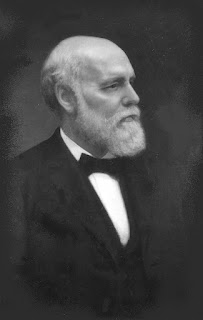
During the years just before Meta Chestnutt arrived in Nashville, the State Normal College went through two moments of crisis. Both episodes, as they turned out, effectively strengthened the school. The first related to the near-constant concern of many institutions of higher learning: money. Since the founding of the college in 1875, the State of Tennessee, impoverished as a result of the Civil War, contributed nothing to it. The college was able to survive only because the University of Nashville, its parent institution, provided the facilities and the Peabody Education Fund covered virtually all of the operating costs. Under those conditions, the school could subsist, but it could not thrive and grow. In 1880, President Eben Stearns (pictured here) and Barnas Sears, the general agent for the Peabody Education Fund, visited Georgia and considered an offer from state leaders to bring the school to either Athens or Atlanta. They promised that, unlike Tennessee, Georgia was willing and able to provide funding. Naturally, the prospect of moving the school to another state presented its own set of problems. But before any more plans could be made, wealthy residents of Nashville, alarmed by the news about a possible move, immediately contributed $4,000 and promised there would be more. Soon afterwards, in 1881, the Tennessee legislature appropriated $6,000 for the college with a pledge to support it in the future. The state kept its promise. In fact, from 1881 until 1905, the General Assembly appropriated $429,000 for the college. During the same time period, the Peabody Education Fund contributed something close to the same amount. As a result, the school was able to develop as never before.[1]

In 1883, several new graduates of the college appeared before the Tennessee State Board of Education. In a petition with seventeen separate complaints they criticized their alma mater, especially the leadership of Stearns. Many of the items on the petition echoed the grumblings of some of the school's professors: some of the faculty were insufficiently-trained; alumni and faculty were denied power to influence the direction of the school; and textbooks were too few and of poor quality. For his part, President Stearns refused to respond. He was able to remain quiet mainly because he had the confidence of the state board as well as the trustees of the Peabody Fund. And, many of the current students expressed their support for the administration. The crisis came and went. But this was partly because, until his presidency ended with his death in 1887, Stearns effectively addressed almost every point in the petition and increased the pace of needed change.[2] Consequently, when Chestnutt began her studies in Nashville, the State Normal College was better than it had ever been before.

Notes

[1] Paul K. Conkin, Peabody College: From a Frontier Academy to the Frontiers of Teaching and Learning (Nashville, TN: Vanderbilt University Press, 2002), 122-25; Franklin Parker and Betty J. Parker, "Peabody Education Fund in Tennessee," in Tennessee Encyclopedia of History & Culture, ed. Carroll Van West (Nashville: Tennessee Historical Society, 1998), 725-26. 

[2] Conkin, Peabody College, 125-128.

Tuesday, January 25, 2022

Meta Chestnutt's Teachers in Nashville

During her student days at Peabody, Meta Chestnutt came to know several outstanding female teachers. Their ability as classroom instructors and their marital status must have made a permanent impression on her. For example, she no doubt studied under Elizabeth Bloomstein. "Miss Lizzie," as they called her (pictured here), was a native of Nashville and the 1877 salutatorian at the college who later joined its faculty. A life-long student, during breaks in the academic year she pursued additional study at Harvard and the University of Chicago. She traveled extensively in America and Europe. Over a forty-year career, Bloomstein earned a fabulous reputation as a teacher of history and geography.[1]

Another outstanding teacher at Peabody was Julia Sears. She grew up on Cape Cod and began her teaching career in Boston, specializing in science and mathematics. She was the first person in the University of Nashville system to serve for thirty years. At some point, she became the faculty member with the longest tenure, which meant that her name appeared first in the school's catalog. Besides the president, no one at Peabody was paid a higher salary. In 1907, she retired from Peabody at the end of thirty-two years and became "the first teacher in the South to receive a pension from the Carnegie Foundation."[2] 

However, like all the other long-term female members of the faculty in Nashville, neither of these women ever married or had children. Of course, this meant they had plenty of opportunities to pursue knowledge and perfect their teaching skills. Clearly though, they never sensed the freedom to fill the roles that most women of the time were expected and wanted to fill. Young "Miss Meta," as she would come to be called, was watching.

Notes

[1] "School Leader's Funeral Friday," Nashville Tennessean, June 3, 1927, 8; Paul K. Conkin, Peabody College: From a Frontier Academy to the Frontiers of Teaching and Learning (Nashville, TN: Vanderbilt University Press, 2002), 118.

[2] "Peabody Teacher for 32 Years, Dies. Miss Julia Sears Buried in Massachusetts," Nashville Tennessean, September 26, 1929, 22; Conkin, Peabody College, 119, 136-37.

Monday, January 24, 2022

Nashville in the 1880s and Beyond

During her three years in Nashville, from 1886 to 1889, Meta Chestnutt witnessed the life of a rapidly-growing city. According to the U.S. Census Bureau, in 1880, Nashville had a population of 43,350, making it the fortieth largest city in America. By 1890, the population had jumped to 76,168, an increase of 76% in just ten years. During that decade, Nashville moved from fortieth to thirty-eighth largest city in the nation, ahead of both Memphis (64,495) and Atlanta (65,533).[1] It was easily the biggest, most cosmopolitan place where Meta would ever live. And who were these new residents of Nashville? According to historian Don H. Doyle, they were 

country folk who arrived from Middle Tennessee and other parts of the South. Some were ex-slaves whose ties to the land and to their former masters had been sundered; others were white farmers pushed off the land and out of small towns by the strains of postwar agricultural readjustment. Mostly young and poor, they drifted into the strange new environment of the city, some to thrive on the opportunities it offered to ambitious newcomers, others to flounder in the absence of family, church, and community ties that had guided them in the country.[2]

The social upheaval that accompanies such rapid growth was tempered by the simultaneous growth of religious groups in Nashville. The federal religious census of 1890 counted more than 8,000 white Methodists in the city. In the same year, black Methodists numbered nearly 2,000. There were slightly more than 6,000 Baptists of various kinds, and 6,000 Roman Catholics. Presbyterians numbered more than 3,500. And, Nashville was home to 2,400 adherents of the Stone-Campbell Movement, members of Christian Churches and Churches of Christ.[3]

Notes

[1] U.S. Census Bureau, "Table 11. Population of the 100 Largest Urban Places: 1880," accessed January 24, 2022, https://www2.census.gov/library/working-papers/1998/demo/pop-twps0027/tab11.txt; and "Table 12. Population of the 100 Largest Urban Places: 1890," accessed January 24, 2022, https://www2.census.gov/library/working-papers/1998/demo/pop-twps0027/tab12.txt

[2] Don H. Doyle, Nashville in the New South, 1880-1930 (Knoxville: University of Tennessee Press, 1985), 121.

[3] Ibid., 123.

Friday, January 21, 2022

Meta Chestnutt's Time in Tennessee

One of the buildings that Meta Chestnutt (1863-1948) knew well during her student days in Nashville still stands today. In 1853, the University of Nashville laid the foundation for a structure that would house its Literary Department. Builders completed it in 1854. 


In time, the Stone Building, sometimes called the Castle, would serve as home to the Western Military Institute, which was also a part of the University of Nashville. It would later house the Montgomery Bell Academy and, eventually the Peabody Normal College.

Although today some folks in Nashville call it Lindsley Hall, it was never designated such. In fact, Lindsley Hall was the name of a barracks at Western Military Institute, and was built nearby in 1856. That structure, the real Lindsley Hall, was demolished in 1911.

When Meta first saw this building, it was the State Normal College of Tennessee, whose name would soon be changed to Peabody Normal College. The photo above was taken likely in the early twentieth century. (The Wiki Commons description suggests it was taken January 1, 1933. But the foliage suggests it wasn't January). Below is another photo of the building. That photo is dated 2014.
 

Sunday, August 08, 2021

Meta Chesnutt's Academic Success

When Meta Chestnutt was growing up, her brother, Isaac, teased her for being so tall and thin. He said she looked a bean pole and started calling her "Beany." The nickname apparently stayed with her. When someone at Bethel Academy, comparable to a modern high school, mailed her spring 1882 grade report, they addressed it to eighteen-year-old "Beny Chestnutt."[1] But there was nothing laughable about her school work. During the semester ending April 7, 1882, she was never absent or tardy. Her lowest grade was in Algebra: 94 percent.[2] Two years later, in June 1884, she graduated from Bethel, was named the class valedictorian, and delivered an address at the commencement ceremony. That fall, she began her studies at the Greenville Institute, later named the State Teachers' College, in Greenville, North Carolina. Upon graduating from the Institute in the spring of 1886, she was approached by her principal, J. W. Duckett, a former North Carolina State Superintendent of Schools, who had a surprise. Without her knowledge, Duckett had secured for her a full scholarship from the North Carolina State Board of Education and a place in the incoming class at the Peabody Normal School, later known as the George Peabody College for Teachers, in Nashville. By then, she was a confident twenty-three year old, well-prepared for the next academic challenge. During her student days at Peabody, she made time and was permitted to teach Bible classes that included young men at the South Nashville Christian Church.[3] David Lipscomb served as one of the congregation's elders until he died in 1917. South Nashville's first revival meeting was conducted by Larimore in 1887, during which 123 people confessed their faith in Christ and were baptized.[4] It was likely at the South Nashville Church that Chestnutt met Larimore, one of the best-known evangelists among the Churches of Christ in his generation.[5] Larimore learned about Chestnutt's dream of conducting an educational mission among Indians. He told her he knew W. J. and Annie Erwin, Christians and residents of Silver City, Indian Territory, a community that needed a teacher.[6]

Notes

[1] Meta Chestnutt Sager Collection, box 3, folder 1.

[2] Ibid.

[3] Eva Heiliger, "Born to Meet Adversity," 16-18.

[4] John Wooldridge, Elijah Embree Hoss, and William B. Reese, History of Nashville, Tennessee (Nashville: H. W. Crew, 1890), 496-97.

[5] Douglas A. Foster, "Larimore, Theophilus Brown (1843-1929)," in Encyclopedia of the Stone-Campbell Movement, 452-53.

[6] Heiliger, 18.