Showing posts with label Tennessee. Show all posts

Wednesday, March 02, 2022

Meta Chestnutt in Tennessee, 1886-1889 (2)

Although there must have been some well-to-do members in Disciples churches in Nashville at the time, most of the people Meta Chestnutt worshipped with there were not the city's elite. According to research conducted by historian Don H. Doyle, in 1880, of the thirty-six economic leaders in Nashville whose religious persuasions are known, half were Methodists. The other half were either Presbyterians, Baptists, or Roman Catholics. Not one was a member of a Stone-Campbell congregation.[1]

Note

[1] Don H. Doyle, Nashville in the New South, 1880-1930 (Knoxville: University of Tennessee Press, 1985), 64-66. See esp. Table 2 on 65.

Wednesday, February 02, 2022

Tennessee's State Normal College, 1880-1887

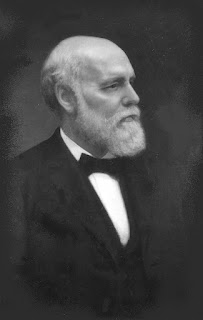
Eben Stearns
During the years just before Meta Chestnutt arrived in Nashville, the State Normal College went through two moments of crisis. Both episodes, as they turned out, effectively strengthened the school. The first related to the near-constant concern of many institutions of higher learning: money. Since the founding of the college in 1875, the State of Tennessee, impoverished as a result of the Civil War, contributed nothing to it. The college was able to survive only because the University of Nashville, its parent institution, provided the facilities and the Peabody Education Fund covered virtually all of the operating costs. Under those conditions, the school could subsist, but it could not thrive and grow. In 1880, President Eben Stearns (pictured here) and Barnas Sears, the general agent for the Peabody Education Fund, visited Georgia and considered an offer from state leaders to bring the school to either Athens or Atlanta. They promised that, unlike Tennessee, Georgia was willing and able to provide funding. Naturally, the prospect of moving the school to another state presented its own set of problems. But before any more plans could be made, wealthy residents of Nashville, alarmed by the news about a possible move, immediately contributed $4,000 and promised there would be more. Soon afterwards, in 1881, the Tennessee legislature appropriated $6,000 for the college with a pledge to support it in the future. The state kept its promise. In fact, from 1881 until 1905, the General Assembly appropriated $429,000 for the college. During the same time period, the Peabody Education Fund contributed something close to the same amount. As a result, the school was able to develop as never before.[1]

In 1883, several new graduates of the college appeared before the Tennessee State Board of Education. In a petition with seventeen separate complaints they criticized their alma mater, especially the leadership of Stearns. Many of the items on the petition echoed the grumblings of some of the school's professors: some of the faculty were insufficiently-trained; alumni and faculty were denied power to influence the direction of the school; and textbooks were too few and of poor quality. For his part, President Stearns refused to respond. He was able to remain quiet mainly because he had the confidence of the state board as well as the trustees of the Peabody Fund. And, many of the current students expressed their support for the administration. The crisis came and went. But this was partly because, until his presidency ended with his death in 1887, Stearns effectively addressed almost every point in the petition and increased the pace of needed change.[2] Consequently, when Chestnutt began her studies in Nashville, the State Normal College was better than it had ever been before.

Notes

[1] Paul K. Conkin, Peabody College: From a Frontier Academy to the Frontiers of Teaching and Learning (Nashville, TN: Vanderbilt University Press, 2002), 122-25; Franklin Parker and Betty J. Parker, "Peabody Education Fund in Tennessee," in Tennessee Encyclopedia of History & Culture, ed. Carroll Van West (Nashville: Tennessee Historical Society, 1998), 725-26. 

[2] Conkin, Peabody College, 125-128.

Tuesday, January 25, 2022

Meta Chestnutt's Teachers in Nashville

During her student days at Peabody, Meta Chestnutt came to know several outstanding female teachers. Their ability as classroom instructors and their marital status must have made a permanent impression on her. For example, she no doubt studied under Elizabeth Bloomstein. "Miss Lizzie," as they called her (pictured here), was a native of Nashville and the 1877 salutatorian at the college who later joined its faculty. A life-long student, during breaks in the academic year she pursued additional study at Harvard and the University of Chicago. She traveled extensively in America and Europe. Over a forty-year career, Bloomstein earned a fabulous reputation as a teacher of history and geography.[1]

Another outstanding teacher at Peabody was Julia Sears. She grew up on Cape Cod and began her teaching career in Boston, specializing in science and mathematics. She was the first person in the University of Nashville system to serve for thirty years. At some point, she became the faculty member with the longest tenure, which meant that her name appeared first in the school's catalog. Besides the president, no one at Peabody was paid a higher salary. In 1907, she retired from Peabody at the end of thirty-two years and became "the first teacher in the South to receive a pension from the Carnegie Foundation."[2] 

However, like all the other long-term female members of the faculty in Nashville, neither of these women ever married or had children. Of course, this meant they had plenty of opportunities to pursue knowledge and perfect their teaching skills. Clearly though, they never sensed the freedom to fill the roles that most women of the time were expected and wanted to fill. Young "Miss Meta," as she would come to be called, was watching.

Notes

[1] "School Leader's Funeral Friday," Nashville Tennessean, June 3, 1927, 8; Paul K. Conkin, Peabody College: From a Frontier Academy to the Frontiers of Teaching and Learning (Nashville, TN: Vanderbilt University Press, 2002), 118.

[2] "Peabody Teacher for 32 Years, Dies. Miss Julia Sears Buried in Massachusetts," Nashville Tennessean, September 26, 1929, 22; Conkin, Peabody College, 119, 136-37.

Tuesday, December 11, 2018

J. J. Trott: Missionary to the Cherokees, 4

On March 6, 1856, J. J. Trott sent a letter from his home in Franklin College, Tennessee, to the Gospel Advocate magazine in Nashville. He explained that he had just returned home from a three thousand mile trip through Arkansas, Missouri, and the Cherokee Nation, Indian Territory, in what is now northeastern Oklahoma. Wisely, he had avoided the deadly chaos over slavery in what came to be known as Bleeding Kansas.

The trip, which took up the previous November through February had Trott traveling in frigid conditions "by steamboat, railroads, stage, horseback, and sometimes on foot." He was disappointed that although he had been authorized by the American Christian Missionary Society to solicit funding for his proposed Indian mission, he had managed to collect only $166.
The churches had contributed their thousands to Bethany College and Christian University, and their hundreds for Revision, and therefore came to the sage conclusion, that a few dimes or dollars was all that they could and ought to do for the conversion of the children of Shem![1]
(If you happen to serve as a missionary, or you work with a large, multi-staff church, it might be some consolation to know that your never-ending competition for resources is not a new one).

In spite of the cold weather, Trott enjoyed his time in Indian Territory. While in the Cherokee Nation, he "preached at several important points" and visited with many old acquaintances and friends he had first met in Georgia over twenty years before, prior to the removal of the Cherokee people to the West.

A man of his day, Trott noted with satisfaction that the Cherokees had advanced in all of the ways regarded by Euro-Americans as marks of civilization: large-scale agriculture, animal husbandry, frame and brick home construction, and high rates of literacy resulting from a modern school system. "Thus," he wrote, "we see that the Cherokees have all the means of improvement. All they need in a religious point of view is more missionaries to them in applying the means." He observed that the Moravians, Presbyterians, Baptists, and Methodists already had "missionaries, mission schools, and churches among the Cherokees." Would the Christian churches in the United States continue to do less?[2]

Notes

[1] J. J. Trott, "The Indian Mission," Gospel Advocate (April 1856), 110. Christian University was the original name of the school that came to be known in 1917 as Culver-Stockton College. See George R. Lee, "Culver-Stockton College," Encyclopedia of the Stone-Campbell Movement, 258.

[2] Trott, "The Indian Mission," 111.

Sunday, December 02, 2018

James J. Trott: Missionary to the Cherokees, 3

In the spring of 1837, having spent most of the previous fourteen years in Georgia, J. J. Trott moved back to Tennessee. It must have been a bittersweet time in his life. More than twenty years earlier, in 1815, his family had come to Tennessee from North Carolina, when Trott was still a teenager. It was there in the Volunteer State that he had placed his faith in Christ, joined the Methodist Church, and become one of their circuit-riding preachers.[1] Now, having spent so many years away, he was returning to his old home, to his family of origin and long-time friends.

Trott had first moved to Georgia in 1823. By then, his ability and dedication were obvious to Methodist leaders who made him a missionary to the Cherokees. In early 1828, he married a Cherokee woman in Georgia named Sallie Adair. Not long afterward, he was arrested, persecuted, and imprisoned as one of several missionaries to the Cherokees who refused to take an oath of loyalty to Georgia, an oath which effectively denied the land rights of all Indians within the state's supposed borders. It was also during these years that he happened upon the writings of Alexander Campbell, pursued a fresh study of the Bible, was immersed into Christ. A short time later, Sally died, but not before she was immersed by her husband. She left behind a young son and daughter.[2]

In spite of these hardships, Trott remained in Georgia during the early 1830s. He married another Cherokee woman, Rachel Pounds Adair (who was not a sister to the first wife) and pursued his goal of preaching what he called "the primitive gospel" among the Indians.[3] Although he had separated from the Methodist Church by this point, it seems that his early experience as a circuit rider had become a part of him. He was never content to preach in just one place. For example, an 1836 issue of the Millennial Harbinger places him in Louisiana preaching among the Cherokees there.[4]

In 1837, Trott could see that the Cherokees still in Georgia were destined to be removed by the federal government to the region west of Arkansas, Indian Territory. Rather than face that prospect, he chose to move his young family to Tennessee instead.

From 1837 to 1859, Trott resided in Tennessee. According to Tolbert Fanning, much of that time, Trott was a member of the church of Christ at Franklin College, Tennessee. He was also, according to Fanning, a regional missionary, surpassed by no one as a "self-sacrificing, independent, earnest, humble and faithful teacher" of the Christian faith.[5]

Notes

[1] Tolbert Fanning, "James J. Trott: Messenger of the Church of Christ at Franklin College, Tennessee, to the Cherokee Nation," Gospel Advocate 11 (March 25, 1869), 271-74; Joseph R. Bennett, II, "God's Gift to the Nation: The Biography of James Jenkins Trott, 1800-1868," http://www.therestorationmovement.com/_states/tennessee/trott.htm

[2] James J. Trott, "To the Editor of the Millennial Harbinger," Millennial Harbinger (February 6, 1832), 85; Bennett, "God's Gift to the Nation." Regarding Trott's marriage to Sallie Adair, Bennett cites the February 1828 edition of the Cherokee Phoenix, the first American Indian newspaper. Concerning Trott's marriage to Sallie Adair and, later, to Rachel Pounds Adair, see Emmet Starr, History of the Cherokee Indians and Their Legends and Folk Lore (1921; repr., Tulsa, OK: Oklahoma Yesterday, 1979), 404.

[3] Bennett, "God's Gift to the Nation." Trott's reference to "the primitive gospel" is found in his letter "To the Editor of the Millennial Harbinger," 85.

[4] J. J. Trott, "Query." [Response by Robert Richardson] Millennial Harbinger (May 1836), 233. According to Russell Thornton, a Cherokee-American anthropologist, in the early 1780s, "Cherokees who had fought on the British side in the Revolutionary War asked permission of the Spanish governor at New Orleans to relocate west of the Mississippi River to what was then Spanish territory." Their request was granted by Don Esteban Miro, governor of the Louisiana territory. See Thornton, The Cherokees: A Population History (Lincoln: University of Nebraska Press, 1990), 44.

[5] Fanning, "James J. Trott."

Saturday, November 24, 2018

James J. Trott: Missionary to the Cherokees, 2

In the fall of 1830, James J. Trott, a Methodist missionary to the Cherokee Indians in Georgia, was immersed into Christ at Overall's Creek, four miles from Murfreesboro, Tennessee.[1] Upon hearing the news of Trott's baptism, Methodist leaders set out to diminish his influence. By that time, he had served among their clergy for nearly a decade. Yet, the next published minutes of the regional Methodist conference included the following note: "James J. Trott, without an appointment." No reason was given.[2]

Trott soon realized that his separation from the Methodists was inevitable. Not only were they refusing to employ him anymore, more importantly, his disagreements with the denomination extended far beyond questions about the proper subject and mode of baptism. In the spring of 1832, he wrote a letter to a Mr. McLeod, Methodist Superintendent of Cherokee Missions. Trott stated that in addition to the practice of sprinkling infants, he had come to reject the authority of all human creeds and the denominational habit of treating human opinions as though they were matters of revealed faith. In particular, he renounced the notion, spelled out in the Methodist book of discipline, that the Lord expected him to adhere to John Wesley's creeds as his standard for teaching. He also rejected the polity of the Methodist Church with its four orders of bishops and five types of tribunals. He concluded his letter by describing his predicament and announcing his decision:
Thus, you see, I am compelled to refrain from preaching what I believe to be the truth, to preach what I cannot believe, to suffer expulsion, or to withdraw. I prefer the latter.[3]
From then on, Trott considered himself a mere Christian and associated with the movement that Alexander Campbell called "the present reformation."

But this change did not dampen his commitment to making disciples among the Cherokee Indians. As noted in the previous post, in the early 1830s, the State of Georgia had brutally persecuted Trott, along with dozens of other missionaries, because he refused to take an oath of loyalty to the state which denied all Indian land claims. Still, according to the Cherokee Census Roll of 1835, he was then still residing in Georgia. According to the census, he lived near Oothcaloga Creek where he owned a mill. The record further indicates that Trott, whose first wife died in 1830, had since remarried, and that the two children from the first marriage were also living with him.[4]

Notes

[1] Tolbert Fanning, "James J. Trott: Messenger of the Church of Christ at Franklin College, Tenn., to the Cherokee Nation," Gospel Advocate 11 (March 25, 1869), 271-73.

[2] James J. Trott, Letter to Alexander Campbell, Millennial Harbinger 3, no. 8 (August 6, 1832), 389.

[3] Ibid., 389-90.

[4] Copies of Manuscripts in the Office of the Superintendent for the Five Civilized Tribes, Muskogee, Oklahoma: Cherokee Census Roll of 1835, Compiled from Original Record selected by Grant Foreman, 14: 224. The entire entry for James J. Trott reads as follows: "Three Cherokees, 1 white marriage; 2 readers of English, they owned a mill; one weaver, 1 spinster, 2 descendants of reservees."