My previous two posts were about . . .
1. A general question I have about the place of apologetics, or “Christian evidences,” in the mission of the church.
2. The Christian theologian Karl Barth and his rejection of “natural theology,” trying to establish the existence of God by reason.
That second post (just before the one you’re reading) gives an overview of what Barth said was the first dilemma of the Christian who tries to convert another person by means of natural theology. Now for the second half of what Barth calls the “double dilemma.”
In a debate about the existence of God, says Barth, if the unbeliever realizes that the believer has no intention of giving up his belief even if his arguments fail, the unbeliever may become angry, and understandably so. Feeling as though he’s being toyed with, he will be hardened against the only saving truth.
On the other hand, if the points made by natural theology should “succeed,” there is no guarantee that the unbeliever will then be prepared “for the decision of faith” (93). As things turn out, unbelief might simply “take up its abode” (93) and become satisfied in the sphere of natural theology. Thus, having come to know some god or the other, the unbeliever never comes to know God. [As an “Exhibit A” someone might point to the many people who confess their belief in some “higher power” but who are obviously not Christians].
Barth says that there are two roots from which the plant of “Christian” natural theology grows. And both of them are bad:
1. A “Christian” natural theology does not rightly regard unbelief. For unbelief is not the result of the natural man failing his course in the philosophy of religion. Rather, unbelief is “active enmity against God.” It is not “a hopeful and lovable inexperience which can be educated above itself with soft words and in that way led at least to the threshold of faith” (94). Rather, unbelief “is hatred against the truth and therefore the deprivation of the truth” (95).
2. Second, and even more important, a “Christian” natural theology does not rightly regard God Himself. For the believer, the real God in whom faith believes “must be taken so seriously that there is no place at all for even an apparent transposition to the standpoint of unbelief, for the pedagogic and playful self-lowering into the sphere of its possibilities.” No human being ever stoops down in that way, but only “the real God alone, in His grace and mercy” (95).
So ends Karl’s critique of natural theology. Again I ask, Is Barth on target? Is he wrong? Some of both? I’m curious about what you think and why.
Showing posts with label natural theology. Show all posts
Showing posts with label natural theology. Show all posts
Tuesday, January 16, 2007


Monday, January 15, 2007
Karl Barth's Rejection of Natural Theology, 1
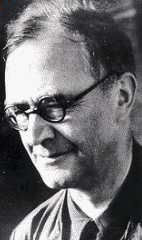 Why did theologian Karl Barth (1886-1968) oppose the idea of trying to lead skeptics to Christ by first convincing them, apart from Scripture, of the existence of God? Whether you agree with Barth or not (and I find myself doing some of both), it’s hard to completely dismiss all of his point on this question.
As much as he wrote--literally thousands and thousands of pages—it’s certain that Barth’s thoughts on this subject can be found in more than one place. Here, I’ll be working from his Church Dogmatics, II/1, beginning at page 88.
One more thing. In what follows, I’ll be using the phrase “natural theology” a lot. Quite literally, “theology” means “words about God.” So what does “natural theology” mean?
In Millard J. Erickson’s terrific little book, Concise Dictionary of Christian Theology, the phrase “natural theology” is defined as “Theology developed apart from the special revelation in Scripture; it is constructed through observation and experimentation.” When it comes to the existence of God, the phrase “natural theology” assumes that people, even skeptics, can come to know about God through observation and reason. On to Karl Barth.
- - - - - - -
Before getting into Barth’s analysis of natural theology, the reader is immediately made aware of his opinion. He begins by asking whether the church should “try to find a readiness of God other than that which is present in the grace of His Word and Spirit” (88). With that sarcastic beginning, he launches an all-out assault. The entirely negative assessment here almost eliminates the distinction between analysis and critique. For Barth, to know natural theology is to hate it.
His analysis goes like this: To borrow a phrase from Paul (my analogy here), much as the law served as a schoolmaster who brought us to Christ, so natural theology can bring a natural person to Theology. That is, by first meeting God by means of natural theology—say, by participating in a fair debate about His existence—the natural person can sometime later come to know God as the Father of our Lord Jesus Christ.
As Barth describes this ideal journey, the establishing of the God’s “knowability in the natural sphere” can function as “a preparation for the establishing of His knowability in His revelation” (89). Further, since leading people to the knowledge of God and thus to salvation is the “highest and most comprehensive work of love”(92), natural theology, which can serve as the way by which the unbeliever comes to faith, is not only legitimate. It is, according to this view, “necessary” (90). Not just a good idea, it is an obligation.
But, says Barth, the path known as natural theology invariably sets up a “double dilemma” (94). What does he mean by that? From the standpoint of the believer, to lead someone to the knowledge of God by means of natural theology is, again, something he is compelled to do. How could he be a person of true faith and love and do anything else?
And yet, ironically, this act of love requires the believer to speak falsely in behalf of the true God! That’s because the believer must use “the well-known artifice of dialectic” (93)—intellectual investigation through dialogue-- in order to bring the unbeliever to the decision of faith. This intrigue necessarily turns the believer into a hypocrite, because he must pretend that he doesn’t know what he certainly does know. That is, to proceed in his work of love, the believer must approach the unbeliever with a faith that is “masked as unbelief” (93). The believer pretends to occupy a position where “faith and unbelief have equal rights” (92).
Not only is this hypocritical, it also means that the believer assumes that he has a set of arguments that, at least in this case, is a necessary supplement to the truth of the gospel. But, says Barth, since the gospel is the unique and true self-revelation of God, such could never be the case. Why? Because: “When a man stands in the decision of faith or unbelief, he has not arrived at this position from any of the pre-decisions which are possible to him apart from God’s revelation” (91).
Furthermore, such a ploy entangles the believer in the sort of condescension that befits only God. Believers who use the tack of natural theology necessarily act as though they are superior to unbelievers. In practice, they deny that they are “poor sinners alongside other poor sinners” (96).
Okay, let’s stop here. We’ll take the second part of the “double dilemma” next time. At this point, do you agree or disagree with Barth? Specifically, is it Christian for a believer to enter into a debate about the existence of God when he has no real intention of giving up his beliefs if proven wrong? On the other hand, since the believer is certain that the true God cannot rightly be disproved, is it hypocritical for the believer to enter a discussion where the other side thinks that that is exactly what can happen?
Between the lines of this discussion, Barth seems to be asking, How could it ever be right and faithful for Christians to act as though they trust in human arguments before they trust in the gospel? Isn’t that an act of human pride? Doesn’t it involve the believer in thinking that he knows a better approach, forgetting that God has already drawn us to Himself by His Son and the Word of the cross? If the believer thinks, with Paul, that the gospel is “the power of God unto salvation” then why would he concoct or borrow something else and preach it instead?
Thoughts?
Friday, January 12, 2007
Natural Theology: Is it Christian?
Mike Cope set off quite a discussion yesterday when he quoted from a new book by Samuel Harris.
Harris recently gained a good bit of attention when he published “The End of Faith: Religion, Terror, and the Future of Reason.” His more-recent book—the one that Mike was quoting—is called “Letter to a Christian Nation.”
Except for the few snippets I’ve come across, I haven’t read either of Harris’ books. But I gather that both of them advance ideas like:
How should the church respond to the Samuel Harrises of the world (assuming that it should)? That is, given our situation, where unbelievers make public assertions designed to refute the claims of Christianity and embarrass the commitment of religious faith, how should Christians respond?
What does the way of Christ teach us about how to handle our ever-popular, in-the-news debates between faith and unbelief, reason and religion, science and Scripture?
Most of all, I come back to this question: To what extent is it Christian for believers, as part of the church’s evangelistic thrust, to advance and defend arguments for the existence of God?
Now, if you come from the same place I do, then you’re likely to say that it is only right for Christians to rationally advance theism. In fact, if someone says that he loves his neighbor as himself, and that he completely loves the God who saves us through His Son, how could that person do anything less than to try to convince the atheist or the agnostic of the existence of God? After all, once the unbeliever is convinced of the reality of God, that person can then be led to Christ, the Son of God.
It’s interesting. Karl Barth, the man regarded by many as the greatest Christian theologian of the 20th century, said that what I just described is not, in fact, Christian. Why did he say that? I’ll explain next time.
Harris recently gained a good bit of attention when he published “The End of Faith: Religion, Terror, and the Future of Reason.” His more-recent book—the one that Mike was quoting—is called “Letter to a Christian Nation.”
Except for the few snippets I’ve come across, I haven’t read either of Harris’ books. But I gather that both of them advance ideas like:
- Biblical religion is deeply flawed. In fact, it’s just plain bad. If someone had to pick a religion to practice, there are better choices than Christianity.
- In practice, Christians renounce what they say they believe and are committed to. They don’t practice what they preach.
- The commonly-known Christian variety of supernatural theism—where, for example, people can pray expecting that God will act in response, even transcending the laws of nature—is irrational.
How should the church respond to the Samuel Harrises of the world (assuming that it should)? That is, given our situation, where unbelievers make public assertions designed to refute the claims of Christianity and embarrass the commitment of religious faith, how should Christians respond?
What does the way of Christ teach us about how to handle our ever-popular, in-the-news debates between faith and unbelief, reason and religion, science and Scripture?
Most of all, I come back to this question: To what extent is it Christian for believers, as part of the church’s evangelistic thrust, to advance and defend arguments for the existence of God?
Now, if you come from the same place I do, then you’re likely to say that it is only right for Christians to rationally advance theism. In fact, if someone says that he loves his neighbor as himself, and that he completely loves the God who saves us through His Son, how could that person do anything less than to try to convince the atheist or the agnostic of the existence of God? After all, once the unbeliever is convinced of the reality of God, that person can then be led to Christ, the Son of God.
It’s interesting. Karl Barth, the man regarded by many as the greatest Christian theologian of the 20th century, said that what I just described is not, in fact, Christian. Why did he say that? I’ll explain next time.
Subscribe to:
Posts (Atom)
