Showing posts with label Meta Chestnutt. Show all posts

Sunday, October 02, 2022

David Lipscomb on the Roles of Christian Women, 1892

In October 1892, David Lipscomb set out to define what Churches of Christ should teach and practice regarding the roles of Christian women in church and society. He began by quoting New Testament passages restricting the activities of women in Christian assemblies (1 Corinthians 14:34-35 and 1 Timothy 2:11), and passages that call on Christian wives to submit to their husbands (Ephesians 5:22; Colossians 3:18; and 1 Peter 3:1-6). Lipscomb insisted that the teaching of these verses "does not degrade woman." He also insisted that, aside from contemporary influence to the contrary, the divine teaching must be obeyed. To see what can happen when women lead churches, one would need to look no further than the Congregationalists of New England who had drifted far from their staid Puritan past. Lipscomb concluded by referring to the Disciples' General Christian Missionary Convention, held that year in Nashville, where women had spoken from the stage in full assemblies. "That meeting," he said, "should be regarded a sin against God and an offense to the Christian womanhood of Nashville and of the South."[1]

Note

[1] David Lipscomb, "Woman and Her Work," Gospel Advocate 34 (October 13, 1892), 644.

Friday, March 11, 2022

Meta Chestnutt "Spreading the Lord's Table"


On November 23, 1930, the Sunday before Thanksgiving, Meta Chestnutt Sager, then sixty-seven years old, presented a collection of relics to the Christian Church in Chickasha, Oklahoma. These included a tablecloth made of fine Scottish linen, at that time "more than a hundred years old," and a set of Communion ware that she described as "perhaps the oldest set used by the Disciples of Christ in Oklahoma between the Canadian and Red River."[1] 

She had brought the Communion ware with her when she moved from North Carolina to Indian Territory in 1889 to serve as a teacher. Not long after her arrival, Miss Chestnutt discovered that she and Annie Erwin, the matriarch of her host family and a Chickasaw Indian, were the only active Disciples of Christ for many miles around. In her typical, modest style, she describes how in those early years, she established and presided at Christian worship:

We taught the Bible and the Bible alone, and, almost from the beginning observed the Lord's Supper. There were no other Disciples of Christ there but Mrs. Erwin and myself, but we knew that when the Lord had said, "Where two or three are gathered together in my name, there am I in the midst of them," it meant us, too, tho [sic] away out here in Indian Territory.[2]

She was keeping the faith in her inherited, distinctively Stone-Campbell way. In their quest to rehabilitate what Alexander Campbell referred to as "the divinely authorized order of Christian worship in Christian assemblies,"[3] early leaders of the American Restoration Movement identified weekly communion as a central practice. For example, when Thomas and Alexander Campbell and like-minded believers established the Brush Run church in Washington County, Pennsylvania, in May 1811, "their first act of worship was the observance of the Lord's Supper, which they resolved to celebrate weekly thereafter." [4] And, in the emerging religious tradition that the Campbells and others led, this practice became, and still is, a standard.

So, it was no accident that every week, for years on end, Chestnutt lovingly prepared and presided over the Lord's Supper in the schoolhouse where she taught through the week. Reticent to describe what she did in those terms, Chestnutt typically called it "spreading the Lord's Table," an expression she borrowed from Communion hymns that were well-known at the time.[5]

Notes

[1] Meta Chestnutt Sager, "'Harvest Home Sunday,' Nov. 23, 1930," Meta Chestnutt Sager Collection, box 5, folder 17.

[2] Ibid.

[3] Alexander Campbell, "Order of Worship," Christian Baptist, Vol. II, July 4, 1825, p. 164. Along this line, another of Campbell's phrases was "the ancient order of worship in the Christian church." See Ibid.

[4] Paul M. Blowers and Byron C. Lambert, "The Lord's Supper," in Encyclopedia of the Stone-Campbell Movement, 489.

[5] For example, Philip Doddridge (1702-1751), an important English nonconformist minister, writer, and educator, composed a hymn titled "The King of heaven His table spreads." The first stanza reads: "The king of heaven his table spreads, And dainties crown the board; Nor paradise with all its joys, Could such delight afford." The final stanza calls believers to participate: "All things are ready, come away, Nor weak excuses frame; Crowd to your places at the feast, And bless the founder's name." The song appears in The Christian Hymn-Book, 3rd ed. (Cincinnati: Looker and Wallace, 1815), 167-68, hymn number 187. This hymnal was edited by, among others, John Thompson, one of the signers of the Last Will and Testament of the Springfield Presbytery, a founding document of the Stone-Campbell Movement.

Wednesday, March 02, 2022

Meta Chestnutt in Tennessee, 1886-1889 (2)

Although there must have been some well-to-do members in Disciples churches in Nashville at the time, most of the people Meta Chestnutt worshipped with there were not the city's elite. According to research conducted by historian Don H. Doyle, in 1880, of the thirty-six economic leaders in Nashville whose religious persuasions are known, half were Methodists. The other half were either Presbyterians, Baptists, or Roman Catholics. Not one was a member of a Stone-Campbell congregation.[1]

Note

[1] Don H. Doyle, Nashville in the New South, 1880-1930 (Knoxville: University of Tennessee Press, 1985), 64-66. See esp. Table 2 on 65.

Thursday, February 24, 2022

Meta Chestnutt in Tennessee, 1886-1888

The previous post ended with a question: If Meta Chestnutt grew up in a liberal, "digressive" Disciples environment in North Carolina in the 1860s and 70s, why did she hold conservative, "anti" views as a young adult and for the rest of her life?

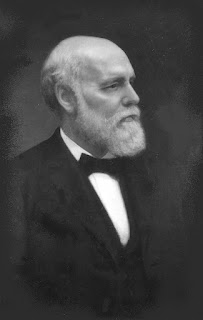
The most likely answer has everything to do with her time in Nashville, from 1886 until 1888. During her student days at the State Normal College, Chestnutt found herself in a thriving church environment. For example, she would have heard the the preaching and teaching of David Lipscomb (pictured here) and E. G. Sewell, co-editors of the anti-instrument and anti-society Gospel Advocate magazine, published from Nashville.

In 1870, Lipscomb realized he needed help in producing the Advocate. He asked Sewell to edit the magazine with him, and from that time until Lipscomb's death forty-seven years later, the two men worked together. Each was a powerful voice for the distinctive viewpoint of the emerging Churches of Christ. In addition to their teaching through the Advocate, the two leaders preached to thousands of people in Middle Tennessee and beyond. During those years, Sewell help to establish the Woodland Street Christian Church in East Nashville. He preached for the congregation for twelve years and for a time served as one of the church's elders. Lipscomb was also an active as a leader among Restoration Movement churches in and around Nashville. In 1891, he and James A. Harding would establish the Nashville Bible School, known today as Lipscomb University.[1] 

By the end of 1889, Lipscomb looked back over the past twenty years with pride: "In 1869 we had one church in Nashville with a membership of about 500. Now we have five churches and three promising missions with a membership of over 2,500 in the city."[2] The five congregations Lipscomb mentioned were the old first church, established in the mid-1820s, with its brand new building on Vine Street; North Nashville Christian Church (organized in 1882); Woodland Street in East Nashville (1883); and the Foster Street and South Nashville congregations, both established in 1887.[3]

Notes

[1] On David Lipscomb, see H. Leo Boles, Biographical Sketches of Gospel Preachers (Nashville: Gospel Advocate Company, 1932), 243-47; and Robert E. Hooper, "Lipscomb, David (1831-1917)," in Encyclopedia of the Stone-Campbell Movement, 480-82. On E. G. Sewell, see Boles, 238-42; and David H. Warren, "Sewell, Elisha Granville (1830-1924)," in ESCM, 680-681. See also David L. Little, "Gospel Advocate," in ESCM, 361-63. 

[2] "From the Papers," Gospel Advocate 31 no. 47 (November 20, 1889), 737.

[3] "History of the Christian Church in Nashville," Daily American (Nashville), (January 26, 1890), 10.

Monday, February 21, 2022

Stone-Campbell Churches in North Carolina and Meta Chestnutt

In his history of the Restoration Movement in North Carolina, Charles C. Ware reveals that during the decades following the Civil War, Disciples in the Tar Heel State did not side with the emerging Churches of Christ. That is to say, they did not oppose instrumental music in worship nor the various para-church organizations like the Disciples' American Christian Missionary Society. For example, in describing the opposite side of the division, Ware wrote:

An ultra conservative group of Disciples, who opposed use of musical instruments in the Churches, and the functioning of missionary societies in the Church, developed under the leadership of Tolbert Fanning and David Lipscomb, both of Tennessee. The strength of this group is mainly in Tennessee and Texas.  . . . They were aggressive in blighting effectually every church of Christ, where they could prevail. . . . The cause of liberal and progressive Christianity received many a hard blow from this source, and its growth was materially retarded.[1]

Clearly, then, Meta Chestnutt grew up among congregations that did not object to instruments in worship and that supported regional and national church societies. Yet, when she wrote to supporters of her mission in Minco in 1897, she set out correct a recent report about her.

I learn that my name has appeared as holding an office in some society. I hope I shall be permitted to state that I do not belong to any religious society of any name or order and never did; also that the Apostles constitute the board and Jesus Christ the President of the only  institution to which I belong, or to which I ever expect to belong.[2]

In addition to its classic anti-society statement, the same newsletter indicates that, among other topics, Chestnutt had recently led a Bible study with the title "Reasons for Discarding the Organ from Worship."[3] Not only anti-society, she was also anti-instrument. What had happened?

Notes

[1] Charles C. Ware, North Carolina Disciples of Christ: A History of Their Rise and Progress, and of Their Contribution to Their General Brotherhood (St. Louis: Christian Board of Education, 1927), 120-121.

[2] Meta Chestnutt, "1897," Meta Chestnutt Sager Collection, box 3, folder 35.

[3] Ibid.

Sunday, February 20, 2022

Women Teachers on the American Frontier

Women teachers who went to the American frontier in the nineteenth century quickly gained a new identity. Often, they experienced a radical contrast between their status in the schools where they had trained compared to their newfound status in the West. Back east, a teacher in training was only one among many students, all of them striving to excel in their studies and to gain the approval of their professors. But in the West, a newly-minted teacher soon realized that she was the best-educated, most eloquent person in the community. For example, Asenath Hammond, a teacher from Maine who moved to Indiana, was surprised by her new and improved standing: "I never thought I was anything of a teacher until I came here and here they almost think I am perfection."[1]

Note

[1] Polly Welts Kaufman, Women Teachers on the Frontier (New Haven, CT: Yale University Press, 1984), 33.

Wednesday, February 02, 2022

Tennessee's State Normal College, 1880-1887

Eben Stearns
During the years just before Meta Chestnutt arrived in Nashville, the State Normal College went through two moments of crisis. Both episodes, as they turned out, effectively strengthened the school. The first related to the near-constant concern of many institutions of higher learning: money. Since the founding of the college in 1875, the State of Tennessee, impoverished as a result of the Civil War, contributed nothing to it. The college was able to survive only because the University of Nashville, its parent institution, provided the facilities and the Peabody Education Fund covered virtually all of the operating costs. Under those conditions, the school could subsist, but it could not thrive and grow. In 1880, President Eben Stearns (pictured here) and Barnas Sears, the general agent for the Peabody Education Fund, visited Georgia and considered an offer from state leaders to bring the school to either Athens or Atlanta. They promised that, unlike Tennessee, Georgia was willing and able to provide funding. Naturally, the prospect of moving the school to another state presented its own set of problems. But before any more plans could be made, wealthy residents of Nashville, alarmed by the news about a possible move, immediately contributed $4,000 and promised there would be more. Soon afterwards, in 1881, the Tennessee legislature appropriated $6,000 for the college with a pledge to support it in the future. The state kept its promise. In fact, from 1881 until 1905, the General Assembly appropriated $429,000 for the college. During the same time period, the Peabody Education Fund contributed something close to the same amount. As a result, the school was able to develop as never before.[1]

In 1883, several new graduates of the college appeared before the Tennessee State Board of Education. In a petition with seventeen separate complaints they criticized their alma mater, especially the leadership of Stearns. Many of the items on the petition echoed the grumblings of some of the school's professors: some of the faculty were insufficiently-trained; alumni and faculty were denied power to influence the direction of the school; and textbooks were too few and of poor quality. For his part, President Stearns refused to respond. He was able to remain quiet mainly because he had the confidence of the state board as well as the trustees of the Peabody Fund. And, many of the current students expressed their support for the administration. The crisis came and went. But this was partly because, until his presidency ended with his death in 1887, Stearns effectively addressed almost every point in the petition and increased the pace of needed change.[2] Consequently, when Chestnutt began her studies in Nashville, the State Normal College was better than it had ever been before.

Notes

[1] Paul K. Conkin, Peabody College: From a Frontier Academy to the Frontiers of Teaching and Learning (Nashville, TN: Vanderbilt University Press, 2002), 122-25; Franklin Parker and Betty J. Parker, "Peabody Education Fund in Tennessee," in Tennessee Encyclopedia of History & Culture, ed. Carroll Van West (Nashville: Tennessee Historical Society, 1998), 725-26. 

[2] Conkin, Peabody College, 125-128.

Tuesday, January 25, 2022

Meta Chestnutt's Teachers in Nashville

During her student days at Peabody, Meta Chestnutt came to know several outstanding female teachers. Their ability as classroom instructors and their marital status must have made a permanent impression on her. For example, she no doubt studied under Elizabeth Bloomstein. "Miss Lizzie," as they called her (pictured here), was a native of Nashville and the 1877 salutatorian at the college who later joined its faculty. A life-long student, during breaks in the academic year she pursued additional study at Harvard and the University of Chicago. She traveled extensively in America and Europe. Over a forty-year career, Bloomstein earned a fabulous reputation as a teacher of history and geography.[1]

Another outstanding teacher at Peabody was Julia Sears. She grew up on Cape Cod and began her teaching career in Boston, specializing in science and mathematics. She was the first person in the University of Nashville system to serve for thirty years. At some point, she became the faculty member with the longest tenure, which meant that her name appeared first in the school's catalog. Besides the president, no one at Peabody was paid a higher salary. In 1907, she retired from Peabody at the end of thirty-two years and became "the first teacher in the South to receive a pension from the Carnegie Foundation."[2] 

However, like all the other long-term female members of the faculty in Nashville, neither of these women ever married or had children. Of course, this meant they had plenty of opportunities to pursue knowledge and perfect their teaching skills. Clearly though, they never sensed the freedom to fill the roles that most women of the time were expected and wanted to fill. Young "Miss Meta," as she would come to be called, was watching.

Notes

[1] "School Leader's Funeral Friday," Nashville Tennessean, June 3, 1927, 8; Paul K. Conkin, Peabody College: From a Frontier Academy to the Frontiers of Teaching and Learning (Nashville, TN: Vanderbilt University Press, 2002), 118.

[2] "Peabody Teacher for 32 Years, Dies. Miss Julia Sears Buried in Massachusetts," Nashville Tennessean, September 26, 1929, 22; Conkin, Peabody College, 119, 136-37.

Monday, January 24, 2022

Nashville in the 1880s and Beyond

During her three years in Nashville, from 1886 to 1889, Meta Chestnutt witnessed the life of a rapidly-growing city. According to the U.S. Census Bureau, in 1880, Nashville had a population of 43,350, making it the fortieth largest city in America. By 1890, the population had jumped to 76,168, an increase of 76% in just ten years. During that decade, Nashville moved from fortieth to thirty-eighth largest city in the nation, ahead of both Memphis (64,495) and Atlanta (65,533).[1] It was easily the biggest, most cosmopolitan place where Meta would ever live. And who were these new residents of Nashville? According to historian Don H. Doyle, they were 

country folk who arrived from Middle Tennessee and other parts of the South. Some were ex-slaves whose ties to the land and to their former masters had been sundered; others were white farmers pushed off the land and out of small towns by the strains of postwar agricultural readjustment. Mostly young and poor, they drifted into the strange new environment of the city, some to thrive on the opportunities it offered to ambitious newcomers, others to flounder in the absence of family, church, and community ties that had guided them in the country.[2]

The social upheaval that accompanies such rapid growth was tempered by the simultaneous growth of religious groups in Nashville. The federal religious census of 1890 counted more than 8,000 white Methodists in the city. In the same year, black Methodists numbered nearly 2,000. There were slightly more than 6,000 Baptists of various kinds, and 6,000 Roman Catholics. Presbyterians numbered more than 3,500. And, Nashville was home to 2,400 adherents of the Stone-Campbell Movement, members of Christian Churches and Churches of Christ.[3]

Notes

[1] U.S. Census Bureau, "Table 11. Population of the 100 Largest Urban Places: 1880," accessed January 24, 2022, https://www2.census.gov/library/working-papers/1998/demo/pop-twps0027/tab11.txt; and "Table 12. Population of the 100 Largest Urban Places: 1890," accessed January 24, 2022, https://www2.census.gov/library/working-papers/1998/demo/pop-twps0027/tab12.txt

[2] Don H. Doyle, Nashville in the New South, 1880-1930 (Knoxville: University of Tennessee Press, 1985), 121.

[3] Ibid., 123.

Friday, January 21, 2022

Meta Chestnutt's Time in Tennessee

One of the buildings that Meta Chestnutt (1863-1948) knew well during her student days in Nashville still stands today. In 1853, the University of Nashville laid the foundation for a structure that would house its Literary Department. Builders completed it in 1854. 


In time, the Stone Building, sometimes called the Castle, would serve as home to the Western Military Institute, which was also a part of the University of Nashville. It would later house the Montgomery Bell Academy and, eventually the Peabody Normal College.

Although today some folks in Nashville call it Lindsley Hall, it was never designated such. In fact, Lindsley Hall was the name of a barracks at Western Military Institute, and was built nearby in 1856. That structure, the real Lindsley Hall, was demolished in 1911.

When Meta first saw this building, it was the State Normal College of Tennessee, whose name would soon be changed to Peabody Normal College. The photo above was taken likely in the early twentieth century. (The Wiki Commons description suggests it was taken January 1, 1933. But the foliage suggests it wasn't January). Below is another photo of the building. That photo is dated 2014.
 

Saturday, August 07, 2021

Belle Starr, the Bandit Queen, 1848-1889

Belle Starr, Fort Smith, Arkansas, 1886
One well-known story from post-war I. T. featured Belle Starr, the infamous "bandit queen." Starr grew up in a family of ruffians. Two of her outlaw brothers were killed by lawmen. Her first husband, James C. Reed, had once been a member of Quantrill's Raiders. He was killed in 1874 while resisting arrest. After a relationship with Cole Younger, a member of the Younger Gang and sometime associate of Frank and Jesse James, Belle Reed married Sam Starr. Their family lived in a cabin along the Canadian River at a site known as Younger's Bend, near present Eufaula, Oklahoma. Younger's Bend served as a hideout for the couple's notorious friends, including the James Gang. In 1886, Sam Starr was killed after an argument. And in February 1889, just seven months before Meta Chestnutt arrived in I.T., Belle Starr was gunned down by an unknown assailant.[1]

Note

[1] Adriana G. Schroeder, "Starr, Myra Maybelle Shirley (1848-1889)," in Encyclopedia of Oklahoma History and Culture, 2:1442; Paul I. Wellman, A Dynasty of Western Outlaws (Garden City, NY: Doubleday & Company, 1961), 10. See also Bill O'Neal, "Younger Gang," in Encyclopedia of Oklahoma History and Culture, 2:1664-65.

Tuesday, July 06, 2021

Spreading the Lord's Table: History of an Idiom (3)

Naturally, the language of well-known hymns made its way into the common speech of people who sang them. For example, in his series "On the Breaking of Bread," published in 1825, Alexander Campbell quoted an English translation of John Calvin's monumental Institutes of the Christian Religion to the effect that "Every week, at least, the table of the Lord should have been spread for Christian assemblies; and the promises declared, by which, in partaking of it, we might be spiritually fed."[1]

In 1861, Isaac Errett noted that Restoration Movement congregations in his time would typically "spread the table in the name of the Lord, for the Lord's people, and allow all to come who will, each on his own responsibility."[2]

According to David Lipscomb, the Lord's Supper is "a board spread with the food our Father has prepared for sustaining and developing the spiritual life of his children." In response to the Lord's intention, it is the duty of the church, "our mother," to "spread the table with the life-invigorating viands provided by the Father, and invite the children to partake of them at the regular interval."[3]

Notes

[1] Alexander Campbell, "A Restoration of the Ancient Order of Things. No. IX. On the Breaking of Bread. No. IV," Christian Baptist 3, no. 4 (November 7, 1825), 85.

[2] "Letter from I. Errett," Millennial Harbinger, Fifth series, 4, no. 12 (December 1861), 711.

[3] David Lipscomb, "The Lord's Supper," Gospel Advocate 10, no. 9 (February 27, 1868), 200.

Saturday, July 03, 2021

Spreading the Lord's Table: History of an Idiom (2)

Two more hymns indicate that the language of "spreading the Lord's Table" remained current among the Churches of Christ and Christian Churches in America up to the dawn of the twentieth century. 

"Shepherd of souls, refresh and bless," was composed by James Montgomery (1771-1854), a Scottish poet and hymn writer. It appears in The Christian Hymn-Book (1865), The Christian Hymnal (1871), and The Christian Hymnal, Revised (1882). Its lyrics include the two following stanzas:

Be known to us in breaking bread,
But do not then depart--
Savior, abide with us, and spread
Thy table in our heart.

Then sup with us in love divine;
Thy body and thy blood,
That living bread and heavenly wine,
Be our immortal food.

Edward Henry Bickersteth (1825-1906), an Anglican clergyman, composed "Till he come, O let the words," which was included in the New Christian Hymn and Tune Book (1882). In this song, worshipers are reminded of the eschatological feast as well as the present one:

See, the feast of love is spread:
Drink the wine, and break the bread-
Sweet memorials-till the Lord
Call us round his heavenly board-
Some from earth, from glory some,
Severed only - "Till he come."

Thursday, July 01, 2021

Spreading the Lord's Table: History of an Idiom (1)

Whatever the source of the idiom, British hymn writers popularized the language of "spreading the Lord's table" as a reference to preparing and serving the Lord's Supper. A number of hymns contain this language, including two by Isaac Watts (1674-1748), a nonconformist minister and one of the greatest of all composers of English hymns. "Jesus is Gone Above the Skies" expresses the greatness of the exalted Christ and refers to the experiences and the hope of his followers. In the third of six stanzas, worshipers sing,

The Lord of life this table spread,
With his own flesh and dying blood;
We on the rich provision feed,
And drink the wine, and bless our God. 

The song appears in at least six Stone-Campbell hymnals of the nineteenth century.[1]

Watts also composed "How Sweet and Awful is the Place,"--clearly in an age when awful meant not what it means now, but something more like awesome. The hymn highlights the experiences of the gathered church, including their observance of the Lord's Supper:

Here every bowel of our Lord,
With soft compassion rolls; 
Here the new cov'in his blood 
Is food for dying souls,

While all our hearts and all our songs
Join to admire the feast
Each of us cry, with thankful tongues,
"Lord, why was I a guest."

"Why was I made to hear thy voice,
"And enter while there's room;
"When thousands make a wretched choice,
"And rather starve than come?

'Twas the same love that spread the feast,
That sweetly drew us in.
Else we had still refus'd to taste,
And perished in our sin.

The song appears in the 1815 and 1829 editions of The Christian Hymn-Book. Above all, Philip Doddridge (1702-1751), an important Independent minister, writer, and educator, composed a hymn titled "The King of heaven His table spreads." The first stanza reads:

The king of heaven his table spreads, 
And dainties crown the board;
Nor paradise with all its joys,
Could such delight afford. 

The final stanza calls believers to participate:

All things are ready, come away,
Nor weak excuses frame;
Crowd to your places at the feast,
And bless the founder's name."[2]

In time, this song would appear in dozens of hymnals, including no fewer than eleven published by adherents of the Stone-Campbell Restoration Movement during the nineteenth century.[3] Naturally, the language of hymns like this one made its way into the common speech of people who sang them.

Notes

[1] The Christian Hymn-Book (1815); A Selection of Christian Hymns (1818); The Christian Hymn-Book (1829); Psalms Hymns and Spiritual Songs (1843); Psalms Hymns and Spiritual Songs (1853); and Fillmore's Christian Psaltery (1867).

[2] This wording appears in The Christian Hymn-Book, 3rd ed. (Cincinnati: Looker and Wallace, 1815), 167-68, hymn number 187.

[3] The Christian Hymn-Book (1815), A Selection of Christian Hymns (1818), The Christian Hymn-Book (1829), Psalms Hymns and Spiritual Songs (1834), Christian Psalms and Hymns (1839), Psalms Hymns and Spiritual Songs (1843), The Sacred Melodeon (1848), The Christian Psalmist (1850), Psalms Hymns and Spiritual Songs (1853), The Christian Hymn Book (1865), The Christian Hymnal: Revised (1882).

Friday, June 18, 2021

Gilded Age Reform and Education for Women

The Gilded Age (1865-c. 1900) brought a tremendous amount of change to American culture and society, including issues directly related to women. Based on the popular idea that they were morally superior to men, some women argued they were therefore better qualified to help cure society's ills. Reform in the mid-nineteenth century had allowed more women to venture outside the home. Nearing the end of the century, that trend only grew. Education in general, especially academic opportunities for women, also expanded during this time. In 1870, there were a total of 160 high schools in the entire country. In 1882, that number had grown to eight hundred high schools. By 1900, there were six thousand. Also, the number of female college students grew from "eleven thousand in 1879 to eighty-five thousand in 1900."[1] Without these trends, Meta Chestnutt's academic career in the 1880s is hard to imagine.

Note

[1] Gayle V. Fischer, "Women," in Encyclopedia of the United States in the Nineteenth Century, ed. Paul Finkelman (New York: Charles Scribner's Sons, 2001), 3:402-03.

Tuesday, June 15, 2021

News of Sand Creek in Eastern North Carolina

Across the nation, Americans heard about and condemned the crime at Sand Creek. The outcry could be heard in eastern North Carolina, where in 1865 Meta Chestnutt was a toddler. For example, a piece in the Newbern Daily Times, published in nearby Craven County, called it "the Chivington massacre."[1] An article titled "The Indians" in the Daily North Carolina Times in August 1865 spoke of "the massacre of the Cheyennes by Colonel Chivington."[2] An editorial piece in the very same issue of the paper pointed to the Christianized character of Americans and what at least some thought at the time:

The best statistics in possession of the Indian Office at Washington shows the number of tribes now extant in the States and Territories of the Government to be seventy-eight, numbering in population three hundred and fourteen thousand six hundred and twenty-two in the aggregate.

This furnishes a ruinous commentary upon the doctrine that 'all men are free and equal,' or else augurs a fearful accountability for the Anglo-Saxon race in America, at the final day of accounts. They are either not free and equal with the white man, or else the white man has committed great sin, for if equal they should now number several millions instead of only a third of one million.[3]

This was certainly not the only perspective on Indians reported in North Carolina newspapers in 1865. But it was one.

Notes

[1] Newbern Daily Times, May 12, 1865, 1.

[2] "The Indians," Daily North Carolina Times, August. 5, 1865, 2.

[3] Daily North Carolina Times, August. 5, 1865, 2.

Tuesday, June 08, 2021

The Minnesota Sioux War of 1862

Around the time Meta Chestnutt was born in 1863, several early stories of the so-called "Indian wars" made their way east, horrifying many American citizens. In Minnesota during the summer of 1862, hungry and desperate Dakota Sioux Indians, frustrated by callous treatment from the U.S. government, killed hundreds of white settlers. Governor Alexander Ramsey quickly summoned the state militia. But before the fighting came to an end that year perhaps a thousand on each side had been killed. In the aftermath, U.S. military courts issued a death sentence to 303 Indians. President Lincoln insisted on a review of the legal proceedings in each case, and finally issued a pardon to most of the condemned. Still, when the army hanged thirty-eight men on December 26, 1862 at Mankato, Minnesota, it was the largest mass execution in American history. Sporadic warfare between the two sides spilled over into Dakota Territory to the west and dragged on during the years that followed.[1]

Note

[1] Francis Paul Prucha, The Great Father: The United States Government and the American Indians (Lincoln, NE: University of Nebraska Press, 1984), 1:437-447; Robert Utley, The Indian Frontier, 1846-1890, rev. ed. (Albuquerque, NM: University of New Mexico Press, 2003), 76-81; Roger L. Nichols, American Indians in U.S. History (Norman, OK: University of Oklahoma Press, 2003), 133-34. For a map detailing the Sioux wars from 1862 to 1868, see Utley, 119.

Saturday, May 29, 2021

Isaac Lamar Chestnutt (1851-1907), Part 1

In the records of the Disciples of Christ in North Carolina, Isaac Chestnutt appears for the first time among the delegates who attended the denomination's annual state convention in 1877, held that year at Salem. The "List of Preachers" indicates he was minister for the church at Johnson's Mills in Pitt County.[1] Chestnutt delivered the "Introductory discourse" to the assembled representatives on the first day of the convention, no small honor for a minister just twenty-six years old. Also, he was appointed to serve on a three-man committee that would report on "Lord'sday [sic] Schools" in the state.[2] The recommendation of his committee included the following: "We respectfully recommend to this Convention, the importance of urging upon our preachers the necessity of laying this matter before their respective congregations without delay, making the subject of Lord'sday Schools a specialty." The committee also recommended curricula by Isaac Errett in Cincinnati, and by the Transylvania Publishing Co. in Lexington, Kentucky, trusted sources among the Disciples.[3] 

The annual reports from the years 1877 to 1895, after which Isaac Chestnutt no longer appears, reveal a pattern of frequent moves. During the fifteen years from 1877 to 1892, he and his family moved six times, never staying with a congregation longer than about three years. They went from the church in Johnson's Mills to the church at Maple Cypress, and from there on to Kinston, Farmville, Snow Hill, New Berne, and back to Snow Hill again. Their life seems to have combined social prominence with a good measure of hardship.[4]

Notes

[1] Minutes of the Annual Convention of the Disciples of Christ in North Carolina, Held with the Church at Salem, Pitt County, N. C., October 11th, 12th, and 13th, 1877 (New-Berne, NC: N. S. Richardson, 1877), 2. Chestnutt's name is misspelled twice as "Chesnutt." 

[2] Ibid., 3, 6. The expression Lord'sday appears more than once in this document.

[3] Ibid., 6.

[4] See the various Minutes, sometimes called Proceedings, from the annual gatherings of North Carolina Disciples of Christ.

Thursday, March 25, 2021

John D. Benedict (1854-1946)

John Downing Benedict was born in Clermont, Indiana, in 1854. His family moved to Vermillion County, Illinois, in 1869, and it was there that he graduated from high school. He went on to complete a degree at the University of Illinois. In 1881, the year he turned twenty-seven, Benedict became superintendent of schools in Vermillion County. During his eight years at that post, he developed a uniform educational program for the state's rural schools. The curriculum was so popular it was later adopted by the State of Kansas and by Oklahoma and Indian Territories as well. Benedict's record of success in the field of education was no doubt what led to his being appointed the first U.S. superintendent of schools in Indian Territory in 1899.[1] 

The new position had a remarkable background. Prior to the passage of the Curtis Act of 1898, the Five Tribes of Oklahoma had complete jurisdiction over their respective school systems. But Section 19 of the Curtis Act stated that

no payment of any moneys on any account whatever shall here after be made by the United States to any of the tribal governments or to any officer thereof for disbursement, but payments of all sums to members of said tribes shall be made under direction of the Secretary of the Interior by an officer appointed by him.[2]

Apparently, the U.S. government intended and took the phrase "under direction of" to mean that the Secretary of the Interior would have to approve of the activities for which the tribes received money. And that meant, among other things, federal oversight of schools in Indian Territory.[3] And so it was that Benedict arrived in Muskogee, Indian Territory, on February 27, 1899, to begin his challenging work.[4]

Notes

[1] Carolyn G. Hanneman, “Benedict, John Downing,” Encyclopedia of Oklahoma History and Culture, accessed March 25, 2021, https://www.okhistory.org/publications/enc/entry.php?entry=BE016. See also Grant Forman, "John D. Benedict, Pioneer Educator in Oklahoma," Oklahoma Teacher 27 (May 1946), 17-18.

[2] An Act For the protection of the people of Indian Territory, and for other purposes, Chap. 517, 55th Cong, 2d. sess. (June 28, 1898).

[3] This interpretation stems from Benedict's own view. See John D. Benedict, "Excerpt from Manuscript of 'My Educational Experience'," Indian-Pioneer Papers, Western History Collections, University of Oklahoma, accessed March 25, 2021, https://digital.libraries.ou.edu/cdm/singleitem/collection/indianpp/id/3907/rec/1

[4] Ibid.

Tuesday, March 23, 2021

D. T. Broadus on El Meta Christian College in 1895

The college at Minco is moving on. The building is not complete yet. It will require patience and perseverance to complete the building and get the school in good running order. W. J. Erwin, J. H. and R. S. Tuttle are trustees, and will push it to completion as fast as they can. They now have three teachers, including the music teacher. There are now about ninety pupils and others ready to start as soon as they get more of the boarding department ready. Brethren, let us all encourage this much-needed work. Some good brethren who have money can do a grand work by contributing some of it immediately to assist in finishing up the boarding department. Send your money to either of the trustees, or to Miss Meta Chestnutt, who has labored so faithfully for five long years in bringing the school up to what it is now. She began with a small number of children in a little schoolhouse on the wild prairie, but all the time with this work in view. She has, by persevering until now, brought it to where it is. She is a graduate of Peabody Normal, of Nashville, Tenn., and is a practical, energetic teacher. She begins a thing to succeed. She has but little use for the word fail. Other good teachers will be added as fast as they are needed. One other will be added soon.

D. T. Broadus, "Kansas Notes," Gospel Advocate 37 (January 3, 1895), 14.