Monday, February 25, 2013

Blizzard of '13: Big-time Snow in the TX Panhandle

Top photo was taken at 2 p.m. on Sunday, Feb. 24th. It was about 68 degrees with a light wind. The camera is facing north. As you can tell from the sun-drenched yard, the view to the south was cloudless. I could hardly believe that a blizzard warning would go into effect at 6 p.m.


By 10 p.m. it had hardly snowed at all. But it had gotten very cold. In just a few hours, the temperature dropped by about 40 degrees. The bottom photo was taken this afternoon, Monday, about 24 hours later. The temperature stood at about 30.


There were some pretty high drifts near homes and fences. Much of Amarillo and Canyon was shut down today (public schools, colleges, various businesses, and the mall). I suspect there will be several closings and cancellations for tomorrow as well. This snow was wet and heavy.


They just announced on the evening news that the official measurement is at least a foot of snow, and more like 19 inches in some places. Area schools will be closed tomorrow as well as today.

Friday, February 15, 2013

England and the Early U.S. in Asian Trade

Fichter, James R. So Great a Proffit: How the East Indies Trade Transformed Anglo-American Capitalism. Cambridge, MA: Harvard University Press, 2010.

This book is about Anglo-American capitalism in Asia. The story, says author James R. Ficther, illustrates "the deep links between the United States and the rest of the world from that country's inception (2-3).

For what it's worth, the part about "from that country's inception" is significant. The field of historical study that focuses on the U.S. and the rest of the world is growing rapidly. More to the point, it emphasizes not so much U.S. impact on the rest of the world, but rather the world's contributions and connections to U.S. history.

In this book, Fichter notes that American international traders did quite well for themselves in the years that immediately followed the American Revolution. Their economic success helped to pave the way for the tremendous growth that the U.S. experienced during the nineteenth century. But how did it happen? A careful historian, Fichter argues that there were a number of global factors at work in the rise and success of early-U.S. international trade. According to the author, some of these factors were as follows:

1. A strong American resistance to state-sponsored monopolies. The English East India Company was the only corporation that could legally import Asian goods, like tea, to Great Britain and her colonies. This, says Ficther, was at the root of the Boston Tea Party in December 1773. It wasn't merely that British subjects in America resented taxes on tea. It was that they also rejected the monopoly that locked American merchants out of the import business. From the beginning, the United States held onto the economic theory that insists that open and fair trade is a good thing for everyone.

2. The French Wars, which lasted from about 1793-1815, were an incredible distraction and impediment to European trade. European navies required ships for military purposes. Hostile countries interfered in each other's international trade. All along, the U.S. was basically neutral. So its trading vessels could safely sail under the American flag and do business with anyone.

3. Asian sellers wanted to be paid by Western buyers in silver. But there wasn't much of that in the early United States. American business leaders remedied that problem by selling shares in a given trading voyage to sometimes twenty or more individual investors. Most of these investors could never have owned a ship or financed a voyage. But they could still get in on the huge profits that came from international trade. In essence, by pooling their silver, Americans were not only able to make a lot of money, they were also able to quickly become major players in the game of Western trade with the East.

4. In spite of all its pomp and pride, the English East India Company, a state monopoly, was incredibly inefficient. Ironically, by attempting to retain its authority and unique legal status, it defeated itself.

5. British colonization in Asia created a whole set of problems associated with ruling a place so far from home. The United States didn't have those problems because it didn't have colonies in Asia.

By 1815, the English East India Company was kaput. Also by that time, enough American international traders had accumulated enough capital that they were able to help other industries in the U.S. to grow. In short, the British came to adopt a superior approach to Asian trade. While that was happening, the United States became a major player in Asian trade. The foregoing is nothing like a complete review of this book. But it does present some of the highlights.

Now, what was best about this book? I'm no expert on this topic, but I can tell you about what struck me. I think that the scope and depth of this book are impressive, to say the least. Ficther has spent a good bit of time in libraries and archives literally all over the world. Because of the extent of his painstaking research, he is able to tell a broad, complex story that takes into account a tremendous amount of wide-ranging information. This book represents quite an achievement, one that the reader will learn from and appreciate.

What wasn't so good about this book? While focusing on economics, Ficther tends to ignore the political dimension of his story. This shows up when one takes note of the featured actors. The author pays a lot of attention to people like American merchants, ship captains, and representatives of the East India Company. By contrast, we hear very little about significant politicians of the day. Perhaps the most glaring omission is Fichter's near silence about the labor of slaves in the Caribbean, an absolutely vital aspect of this episode in history. I am reluctant to fault a book along this line because it seems like faulting the author for not writing a different book. But I do think that more attention to the issues I have mentioned here would make this really fine book that much better.

Saturday, February 02, 2013

A. C. Huff: A Brief Biography

The first full-time preacher for the Church of Christ in Altus, Oklahoma was A. C. Huff. By the time he arrived in Altus in 1907, he was forty-three years old and brought with him over twenty years of preaching experience. The congregation paid him $60 a month, which was roughly equivalent to $1550 by 2013 standards.

A.C. Huff was born in 1864 in Halletsville, Texas, a little town in Lavaca County, about halfway between Houston and San Antonio. His mother died when he was just three years old. As tragic and sad as that was, the little boy was fortunate in that he had four older sisters who mothered him.

Growing up during those difficult years just after the Civil War, he had very few opportunities to receive any formal education. At the outbreak of the War, many schools across the South closed. It was years later before public schools were common. However, when he was sixteen he was able to attend school regularly for a time at Brownwood, Texas.

We know very little about the religious background of his family. We do know that he was baptized into Christ by W. E. Hawkins in 1882, and that he began preaching two years later, when he was twenty years old.

From that time on, for over 80 years, A. C. Huff preached the gospel of Christ and taught the truth of the Bible! He lived from 1864 to 1967--from Civil War to Civil Rights--and died at the age of 103. If he had lived two more months, he would have turned 104. During those 80-plus years of ministry, he was instrumental in planting congregations at Tucumcari and Raton, New Mexico; at Vega, Dodson, and Bronte, Texas; and at Lacey Chapel, Oklahoma. He preached in countless places, engaged in four religious debates that we know of, fathered twelve children, and delivered a 40-minute sermon on the day he turned 101.

Apparently, he spent less than a year in Altus. Our best records indicate that he worked with the church there in 1907, and with the church in Hollis, Oklahoma in 1910. It is a testimony to his preaching in Altus that since those days, there have only been a few short times when the Church of Christ did not support a regular preacher.

A. C. Huff passed from this life on December 8, 1967 in Del City, Oklahoma. The next morning, John R. Stewart conducted his funeral there and accompanied the casket to McLean, Texas, where a memorial service was held at 3 p.m., and where the old preacher lies buried until the resurrection.

Bibliography

Baxter, Batsell Barrett and M. Norvel Young, eds. Preachers of Today: A Book of Brief Biographical Sketches and Pictures of Living Gospel Preachers. Nashville: Christian Press, 1952.

Burns, Thelma. "Church History: Church of Christ, Altus, Oklahoma 1898-1980." Unpublished document, 1980. The best written source for the broad sweep of the history of the Hudson and Elm congregation.

Hall, W. Claude, "Congregational Growth and Expansion: Altus, Oklahoma," Firm Foundation September 13, 1927. An indispensable source for the early history of what was at that time the only congregation of the Church of Christ in Altus. Includes photos.

Lambert, Gussie. In Memoriam. Shreveport, LA: Gussie Lambert, 1988. Contains a four-page biography of Huff and a photo.

Stewart, John R. "Huff, A. C.," Gospel Advocate January 11, 1968. Huff's obituary, written shortly after his death by the man who conducted his funeral.

Wilhite, J. Porter. The Trail Blazers: Heroes of the Faith. Shreveport, LA: Lambert Book House, 1965. Includes a brief biography of Huff and the notes for one of his sermons.

Wilson, Linda D. Encyclopedia of Oklahoma History & Culture, s.v. "Schools, Subscription." http://digital.library.okstate.edu/encyclopedia/entries/S/SC005.html (accessed January 30, 2013). I found this article helpful for understanding a reference to the little formal education that A. C. Huff received at a "subscription school."

Thursday, January 31, 2013

Historical Theory and Method: A Short Annotated Bibliography

Brown, Douglas E. When Past and Present Meet: A Companion to the Study of Christian Thought. Peabody, MA: Hendrickson, 1987.

In this deeply challenging book, Brown posits that the study of Christian thought can lead to a greater appreciation of Christianity as a historical religion. Such study also provides a basis for the critical appraisal of one’s own thought and practice, and can help the student to understand others better.  The book includes a good section on the principles of historical interpretation, and a meditation of sorts on how to handle the aftereffects of such study and how to use it.

Gaddis, John Lewis. The Landscape of History: How Historians Map the Past. Oxford: University Press, 2002.
 
What do historians do? How do they conceive of and go about their work? And what is the value of it? In this series of eight lectures, originally delivered at Oxford during the 2000-01 school year, Gaddis responds to these and other basic questions about the enterprise called history.  To make his discussion of theory easier to follow, he constantly uses illustrations, analogies, and quotations borrowed from the worlds of art, literature, and popular culture.  Even the book’s cover art, Caspar David Friedrich’s The Wanderer above the Sea of Fog, sets up the first of many metaphors that Gaddis puts to work in order to communicate what he wants to say. This is an excellent short introduction to some of the most important questions that historians can ask themselves regarding what they do and why. My fuller review of Gaddis is at the following blog post:
http://frankbellizzi.blogspot.com/2010/09/john-lewis-gaddis-on-nature-of-history.html

Tosh, John. Historians on History. 2nd edition. Harlow, England: Pearson Educational Limited, 2009.

As the title suggests, this book is an anthology. Tosh allows us to listen in as various historians "reflect in public on the nature of their craft" (p. 1). Tosh begins by discussing "four longstanding and influential aspirations of historians." To get a handle on them, I've given these four aspirations the following titles:

1. History for Its Own Sake
2. History as a Map of Time
3. History as a Political Tool
4. History as Prophecy

Tosh regards this list as “the fourfold rationale for the study of history” (p. 9).  In addition to those, he also describes and provides examples of three major debates that have emerged within the ranks of historians over the last thirty years. These, as I see them, are as follows:

1. History About and/or By Subordinates 
2. Is this One of the Humanities, or Social Sciences?
3. History since the Rise of Postmodernism. 

According to Tosh, these are the live issues with which history is wrestling today. For my fuller discussion, see the two following posts:
http://frankbellizzi.blogspot.com/2010/05/john-tosh-on-history-of-history.html

http://frankbellizzi.blogspot.com/2010/05/history-at-present-three-major-debates.html

Sunday, January 27, 2013

A. C. Huff according to J. Porter Wilhite

A. C. HUFF

"Abraham Conn Huff was born February 8, 1864, in Texas, where he lived most of his life. After some country schools, which he attended only about six weeks; at the age of sixteen, he attended in Brownwood, Texas, and was able to teach school for some time. He also was a singing school teacher in those days. He did a lot of mission work wherever it was needed, leading his own singing in many meetings. This work was because of the love of God, and the souls of mankind; because support was practically nothing. Brother Huff began preaching at the age of twenty (1884). This being 1965, he now has preached longer than any living gospel preacher--81 years and still preaching--and preached forty minutes on his birthday this year. This is amazing! He had four debates! He reared twelve children, four sons, each an elder or a preacher of the gospel. WONDERFUL! Preached 81 years."

In J. Porter Wilhite, The Trail Blazers: Heroes of the Faith (Shreveport, LA: Lambert Book House, 1965), 72.

Saturday, January 19, 2013

A. C. Huff, preacher, Church of Christ, Altus, OK, Gospel Advocate obituary

Huff, A. C.

A. C. Huff was born February 8, 1864, in Halletsville, Texas, and departed this life December 8, 1967, at the age of 103 years and ten months.

Brother Huff preached the gospel of Christ eighty years, and was a faithful member of the church of Christ. He had been a member of the Del City congregation during the past few years.

He preached regularly for the church in McLean, Texas, four years, and preached for approximately six years in Montoya, N. M. Also, he preached for several months for the church in Penrose, Colo., thirty-three miles South West of Colorado Springs, Colorado. However, most of his preaching throughout the years was evangelistic preaching. Brother Huff engaged in several debates during his preaching career.

He is survived by four sons and four daughters in the immediate family. The sons are: Thomas B. Huff, Dallas, Texas; Otto A. Huff, Pea Ridge, Arkansas; Gus J. Huff, Henderson, Texas; Leslie G. Huff, Austin, Texas. The daughters are: Mrs. Peter Fullbright, McLean, Texas; Lena Burk, Midwest City, Oklahoma; Eunice Dennis, Midwest City, Oklahoma; Leola Horrell, Midwest City, Oklahoma. Also surviving are: forty grandchildren, 100 great grandchildren, and forty-two great great grandchildren.

A memorial service was held for Brother Huff in Del City, December 9, 1967. The writer preached the funeral sermon. A singing group from the Del City congregation sang some hymns of comfort.

At 3 P.M., Dec. 9, another memorial service was held in McLean, Texas by the writer and assisted there by Brother Smith the local preacher. The body was laid to rest in the McLean cemetery.

John R. Stewart.

Gospel Advocate, January 11, 1968, page 31.
________________________________________

According to an article about the Church of Christ in Altus, Oklahoma, by W. Claude Hall, in Firm Foundation (September 13, 1927), A. C. Huff was the first full-time preacher for the congregation. He began around 1907 "at a salary of $60.00 per month."

According to the find-a-grave website, his full name was Abraham Conn Huff.

A related website indicates that his father, Thomas M. Huff, is buried at Manchaca, Texas, which is near Austin.
_________________________________________

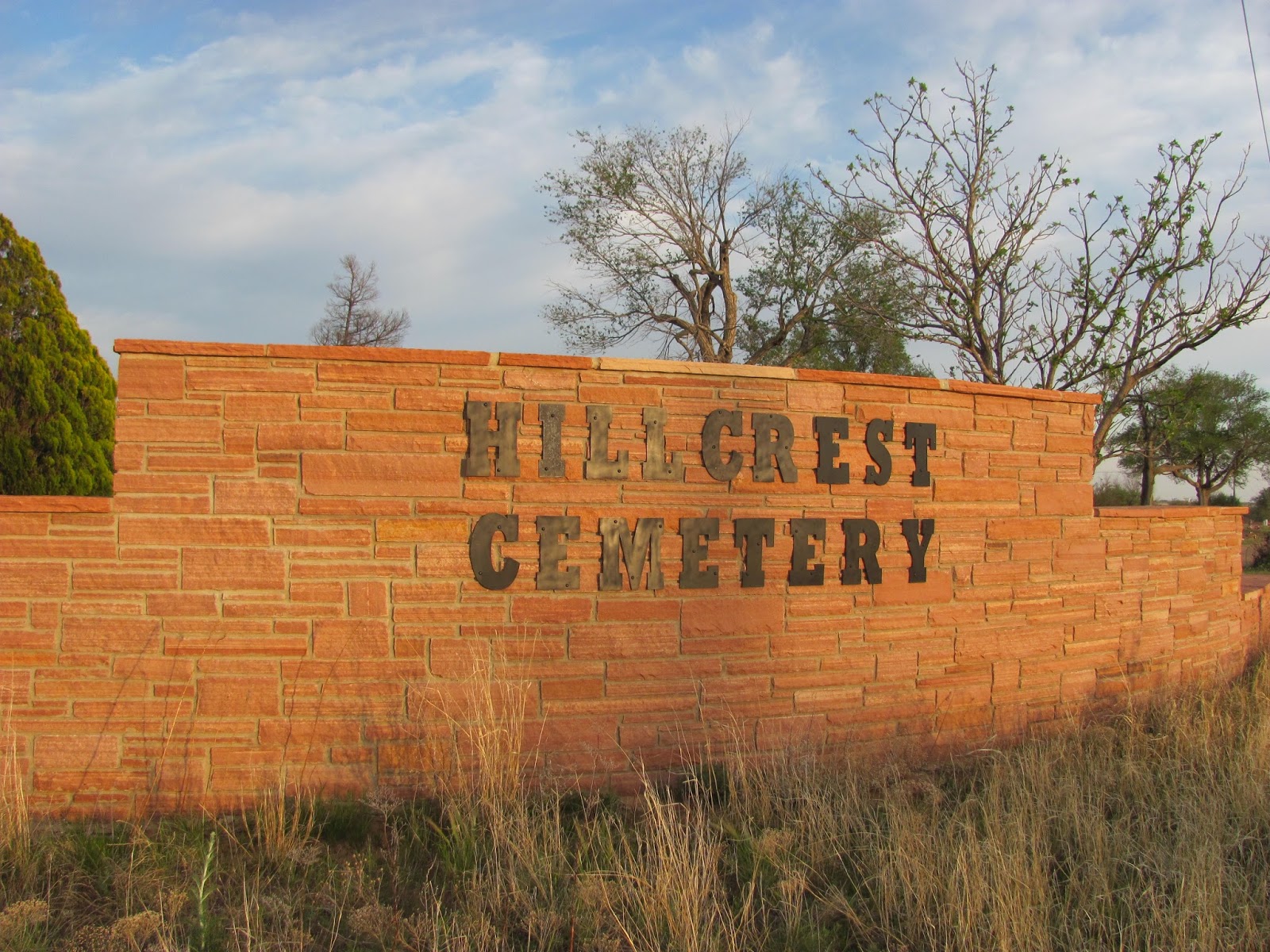
I took these photos in May 2013, a few months after the original post here. Michele and I stopped and had supper at the Red River Steakhouse before going out to the cemetery in McLean, TX. We were on our way to Edmond and Oklahoma City, where I was planning to do some research.


Friday, January 18, 2013

The Military Role of Nuclear Weapons, by Robert S. McNamara

McNamara, Robert S., “The Military Role of Nuclear Weapons: Perceptions and Misperceptions,” Foreign Affairs 62 (Fall 1983): 59-80.

A couple years ago, while conducting some research on the Cold War, I got a little carried away and wound up writing a complete digest of this article. I'm posting it here for whatever it might be worth to others who are exploring the same subject. Just a bit by way of introduction: Robert S. McNamara served as the Secretary of Defense under Presidents Kennedy and Johnson from 1961 to 1968. Afterwards, he was President of the World Bank from 1968 until 1981. With an appetite for facts and figures, he excelled in policy analysis. He published this article in the midst of President Ronald Reagan’s first term in office.

As McNamara explains, then Secretary of Defense Caspar Weinberger and Secretary of State Alexander Haig had recently defended the option of an early first use of nuclear weapons in Western Europe against a Soviet attack that used conventional forces. He notes that at the same time, a number of vital questions were still in the process of being answered. These included, but were not limited to, “the deployment of Pershing II and cruise missiles to Western Europe,” and “the production of the MX missile and the B-1 bomber” (60). Given that many military and political leaders had rightly expressed the horror and unprecedented destruction of a war involving nuclear weapons, McNamara proceeds by raising and responding to four questions.

The first question is, “What is NATO’s present nuclear strategy and how did it evolve?” McNamara says that early on, NATO “turned consciously to nuclear weapons as a substitute for the financial and manpower sacrifices which would have been necessary to mount an adequate conventional defense” (62). However, during his tenure as Secretary of State, an alternate policy was adopted: a policy of “flexible response,” which raised the nuclear threshold, effectively reducing the likelihood of using such weapons while depending more heavily on conventional forces (63). In effect, NATO confined the role of nuclear weapons as (a) a means of deterring a Soviet initiation of nuclear war and (b) a weapon of last resort (64). This trajectory matched up well with a changing Soviet posture that, by 1977, envisioned “a major protracted war between East and West in which nuclear weapons would not be used” (66). By 1982, Soviet Defense Minister Ustinov stated: “Only extraordinary circumstances—a direct nuclear aggression against the Soviet state or its allies—can compel us to resort to a retaliatory nuclear strike as a last means of self-defense” (66).

McNamara’s second question is, “Can NATO initiate the use of nuclear weapons, in response to a Soviet attack, with benefit to the Alliance?” Would it ever be reasonable for NATO to use its battlefield nuclear weapons in Western Europe? In response, McNamara makes the case that, by all accounts, even limited nuclear warfare conducted by NATO against an attack by the forces of the Warsaw Pact would not have the effect of defending Europe. Instead, such use would devastate Europe (67-70).

The third question reads, “Even if the ‘first use’ of nuclear weapons is not to NATO’s advantage, does not the threat of such use add to the deterrent and would not the removal of the threat increase the risk of war?” McNamara responds by pointing out that both American and Soviet executive leaders currently agreed that initiating a nuclear strike against the other was completely unacceptable. Any number of military leaders had also expressed this sentiment. When neither side has the intention—that is, if both sides are committed to never beginning a nuclear war—then the deterrent effect rendered by the presence of nuclear weapons begins to disappear. “One cannot build a credible deterrent on an incredible action” (73). However, says McNamara, the presence of battlefield and medium-range nuclear weapons in Western Europe does have at least one certain effect: it increases the likelihood of a nuclear incident that would could conceivably lead to absolute escalation. At the same time, the presence of such expensive and risky arsenals depletes funding which could otherwise be used to reinforce a conventional military presence (74-76).

McNamara then takes up his fourth question: “If it is not to NATO’s advantage to respond to a Soviet conventional attack by the use of nuclear weapons, can NATO’s conventional forces, within realistic political and financial constraints, be strengthened sufficiently to substitute for the nuclear threat as a deterrent to Soviet aggression?” He responds with a qualified, “Yes.” Such a transition is feasible mainly because of advances in the lethality, sophistication, and speed of newer conventional technologies. However, NATO-member nations would have to increase, only slightly, their contribution to the Alliance, and NATO forces would obviously have to implement the new strategy (77-79).

McNamara concludes by stating his most basic thesis: “that nuclear weapons serve no military purpose whatsoever. They are totally useless—except only to deter one’s opponent from using them” (79, emphasis his). He states that that had been his view in the early 1960s as well, and that he had recommended to Presidents Kennedy and Johnson “that they never initiate, under any circumstances, the use of nuclear weapons” (79).

In this article, McNamara declares to the current US political and military leadership that the thought of using battlefield nuclear weapons against a conventional aggression was unconscionable, and that the current proliferation of nuclear weapons was wrong-headed. It is safe to say that his experience and success in the dangerous 1960s lent considerable weight to his conclusions and recommendations.

This article reveals some of the contrast between the political and military situation of the early 1960s compared to the early 1980s.

Saturday, December 29, 2012

A Philosophy of Teaching College Students

According to the Oxford English Dictionary, the word teach derives from an Old English term that means "to point out" or "to show." A teacher, then, is someone who points out or shows to others something they had not seen before. This metaphor suggests at least three things about teaching.

First, it suggests that the teacher knows something significant that is not obvious, something useful that is not immediately accessible. The critical transfer requires someone who can identify for the learners something they would not otherwise know. This aspect of the work of teaching places the first responsibility upon the shoulders of the teacher. He or she must possess a deep knowledge of what is to be taught. Every student has had the bad experience of being "taught" by someone who did not really know the subject. By contrast, students usually appreciate and truly learn from the teacher who "knows his stuff" as they say.

Second, a teacher must give attention to the question of method. It is rumored that when Yogi Berra became a baseball manager, many of his players recognized that he understood the game as well as anyone. But they were often frustrated when Berra struggled to tell them what he knew. By definition, a genuine scholar is someone who has gained a deep understanding of a certain field of knowledge. But not everyone who has mastered a discipline can effectively teach it to someone else.

What are the best ways to teach? The answers to that question will vary, depending on factors like the subject, class size, the length of class sessions, and the strengths and weaknesses of the teacher. However, none of those significant issues matches the importance of the students themselves. In recent decades, educational theorists have partially succeeded in their attempts to convince teachers to give due consideration not only to their subjects, but also to their students. More than anyone else, David J. A. Clines has challenged me to think of my students as fellow learners. His writings and lectures have helped me to become more effective in the classroom. He has taught me to resist the urge to adopt the role of "sage on the stage," and to act more like an expert "guide on the side."

Absorbing the best ideas, practicing the best methods, and becoming a more effective teacher of students is an on-going challenge for me. But having taken up that challenge, I have discovered a few things, and have come to some conclusions about applying the concept of student-centered learning. For example, I believe it is important for teachers to vary their methods of instruction, to come up with creative ways in which they can involve their students in an array of learning activities. Doing this not only helps to retain their attention, it also ensures that students engage and discover for themselves a wider variety of ways to learn. When students watch a video clip, listen to music, fill out a short questionnaire, or pass an interesting object around the room, the senses of sight, hearing, and touch become a bigger part of the learning experience. When students in small groups discuss a well-worded question, and then report their answers to the rest of the class, they challenge and teach one another in lively, unpredictable ways. They also develop a greater sense of responsibility for their own learning.

Third, the root meaning of the word teach suggests that an ideal learning experience is one where students want to see what it is that the teacher is pointing out to them. But how do teachers help to motivate their students to be real learners? How can they ensure that once the semester is over, the learning will continue?

As I see it, this is one problem where the much-maligned lecture can be a part of the solution. What good can the lowly lecture do? Current research indicates that, although the lecture has its pitfalls as a teaching method, there are a few things it accomplishes well. For example, lectures can help students to read an assignment more effectively by providing an orientation and conceptual framework. Lectures are also good for summarizing material that is scattered over a variety of sources. In my opinion, the great potential of a lecture is realized whenever a teacher speaks clearly and enthusiastically about his or her area of expertise. This is not only great teaching, it also models for students what it means to be a scholar.

Sometimes when I am leading a discussion, especially if the question is open-ended and still unresolved, a student will speak up and ask, "So where do you come out on this?" At that point, I have the opportunity to explain my choice, why I have chosen it, and my relative certainty about my decision. Best of all, at that point I am talking to people who actually care about all of those things. They want to know what the teacher thinks. In that moment, I'm teaching.

Wednesday, December 26, 2012

My 12 Best Books of 2012


I read a few dozen books in 2012. (See photo above!). You can see some of those books at my Amazon list for this year. Almost all of them were non-fiction, and most of them had something to do with American religious history.

What follows are the top picks: my twelve best books of the last twelve months, in the order that I read them. When I put this list together, I wasn't trying to be objective. These are just the books I liked and appreciated the most. After each title, I'll say a little about each one. One more thing before I get to the list: Please recommend to me at least one really good book that you read this past year. (But I don't mean books of the Bible. I'm talking about books I wasn't supposed to have read).


1. Legacy Churches, by Stephen Gray and Franklin Dumond (2009)

In the U.S. alone, about 3,200 churches close their doors every year. This book explains that all congregations eventually die, and offers wise counsel to churches that are nearing the end of the life cycle. The authors recommend that dying churches become "legacy churches" by using their financial resources to begin one or more new congregations. Earlier this year, I posted a complete review: "When and How a Church Should Close."

2. Visible Saints: The History of a Puritan Idea, by Edmund S. Morgan (1965)

Who should be recognized as a member of the church? Morgan, one of the truly great historians of American religion, traces Puritan ideas and practices regarding this question, beginning with the rise of the Reformation in England to about the year 1700. A classic source for understanding Puritanism, this book has remained in print for many years now. For more information, see my full review.

3. Calico Joe, by John Grisham (2012)

I don't read much fiction. But I always enjoy a novel by the great John Grisham. Calico Joe is one of his few non-legal stories. And, like A Painted House, this one has connections to Arkansas. It's a tale about baseball, and it helps if you know something about the game, I think.

4. To Live Ancient Lives: The Primitivist Dimension in Puritanism, by Theodore Dwight Bozeman (1988)

In this highly-significant book, Bozeman starts out by identifying the biblical-restorationist strand in early English Puritanism. Then he shows how this principle was commonly assumed in American Puritanism as well. He convincingly argues that Puritans were committed to a radical application of an old idea: "restoration of primitive purity was to be achieved by massive imitation of the New Testament pattern." Anyone who grew up in a restorationist church will immediately recognize that language. It's been around for a long, long time.

5. Making Heretics: Militant Protestantism and Free Grace in Massachusetts, 1635-41, by Michael P. Winship (2002)

This book is a first-rate, detailed account of the so-called Antinomian Controversy, "arguably the single most important event in seventeenth-century American colonial history." A great researcher and a fine writer too, Winship makes this story come alive.

6. The Enlightenment in America, by Henry F. May (1976)

Scholars often speak of "the Enlightenment," as though it was just one thing. In this ground-breaking work on the subject, May says there were actually four distinct Enlightenments that impacted America. In more or less chronological order they were, says May: Moderate, Skeptical, Revolutionary, and Didactic. This book is about understanding these four types, especially as they relate to American religion. For more, see my review.

7. Holy Fairs: Scotland and the Making of American Revivalism, 2nd Edition, by Leigh Eric Schmidt (2001)

A careful historian, Schmidt makes the case that the religious camp-meetings along the western frontier of America, like the Cane Ridge Revival, were neither spontaneous nor unprecedented. They were, in fact, planned regional communion gatherings, a tradition that began in Scotland in the early 1600s.

8. The Democratization of American Christianity, by Nathan O. Hatch (1989)

A contemporary classic in the field, this book argues that the predominant theme of American Christianity is democracy. History, tradition, and creeds were all swept away to make room for the impulse of the common man. The critical period in the development of this distinctive outlook was 1780-1830.

9. Noah's Compass, by Anne Tyler (2009)

A fine novel. The story's about a sixty-year-old man who's recently lost his job and has now packed it in, just waiting around to die, until he finds out that he's not through living. The author has a great feel for the quirky things that sometimes happen to people, double entendre, and how people sometimes get trapped by their own lies.

10. Religion and the American Nation: Historiography and History, by John Frederick Wilson (2003)

Originally three lectures in a series, this book is an overview of what's been written about religion in America. It's an excellent survey by one of the acknowledged masters of the subject. If you want to quickly get a handle on the topic, this is the place to go.

11. Slave Religion: The "Invisible Institution" in the Antebellum South, by Albert J. Raboteau (1978)

How was slave religion in the South "invisible"? It was, says the author, hidden from the eyes and the ears of white society. Slaves who went to worship with their masters came to realize that Christianity was much greater and nobler, more liberating, than the moralistic lessons they were taught at church. So slaves sang to God and preached the gospel any place where they could find seclusion. Originally Raboteau's doctoral dissertation, this book is a ground-breaking, frequently-cited discussion of the topic.

12. Aimee Semple McPherson and the Resurrection of Christian America, by Matthew Avery Sutton (2007)

This is a carefully-researched, well-written biography that you're likely to enjoy. The author has family roots in the Foursquare Gospel denomination, which McPherson began. At times, he seems a little too sympathetic to his subject, and he claims too much for her. But it's still a fine book.

Friday, December 07, 2012

Why So Many Muslims Are Angry at the West

Every semester, I teach a freshmen-level course at Amarillo College titled "Introduction to World Religions." It's the toughest teaching assignment I have. In about 40 hours of total class time, I introduce, and we explore, five major world religions: Hinduism, Buddhism, Judaism, Christianity, and Islam.

I have been teaching this course for six and half years now. During that time, every semester I've made it a point to read something that is new to me and related to the topic. One of the class sessions on Islam is titled, "Why Are They So Angry? Historical Sources of Muslim Irritation at the West." The following is an overview of two of my better sources for this class period. These are some of the notes I take with me to class:

“The Roots of Muslim Rage” by Bernard Lewis, first appeared in the Atlantic magazine in September 1990. The tag line reads: "Why so many Muslims deeply resent the West, and why their bitterness will not easily be mollified." Yes, the article came out more than a decade before September 11, 2001. It's now over twenty years old. But as you'll see, not very much has really changed since then. And that's why I believe this article is still pertinent. Here's what it has to say:

In order to provide some perspective, Lewis points back to German philosophers of the early twentieth century. Typically, they spoke of America as a civilization without a culture. Sure, they said, the United States is emerging as a world power. But unlike Germans, who are an “authentic” people, Americans lack the vitality and integrity of a long-standing, traditional culture. This view was absorbed by some Muslim intellectuals of the time. It is likely that they saw themselves as belonging to the same category as the European nations. Regardless of significant differences, they all possessed a time-honored, settled way of being.

Following the complete collapse of the Third Reich, German influence in the Muslim world was replaced by Soviet-style Marxism. As we know, the Soviets saw America as the most advanced and, therefore, the most dangerous version of Western capitalism. Again, much of this perspective would have been absorbed in regions of the world where Islam was the dominant cultural force.

Still later, the powerful West was demonized even by—in some cases, especially by—writers in Europe and America. According to this storyline, the innocent Adam and Eve of the East were being ruined by the evil serpent of the West.

No, the foregoing does not represent the source of Muslim rage against the West, particularly the U.S.  After all, it’s not as though the Nazi regime would have been sympathetic to Middle Easterners or to Islam. The same goes for atheistic Communism. How could the Soviet system have looked kindly at Islam with its devotion to Allah and the Quran? So, again, these items are not the source. However, they certainly encouraged the rise of Muslim resentment against the U.S., which in these instances represented a sort of common enemy that lived on the other side of the Atlantic. So what are the causes Muslim rage? Lewis lists three things:

1.  American support for the State of Israel (page 7).
2.  American support for hated regimes (7).
3.  Most offensive of all, imperialism (8). But, says the author, that word "imperialism" has to be understood in the way it is used and heard in the Muslim world. There it has a religious flavor, “being used in association, and sometimes interchangeably, with ‘missionary,’ and denoting a form of attack that includes the Crusades as well as modern colonial empires. This is especially repugnant to Muslims because, in their eyes, the people being subjugated are the ones with the right religion. “What is truly evil and unacceptable is the domination of infidels over true believers” (9). 

So much for Lewis. My second source on this question is a series of lectures on Islam presented by Bill Humble who taught for many years at Abilene Christian University. In his presentation on "The Muslim World," Humble sized up the question with five points, some of which overlap with the article by Lewis. Why are Muslims angry at the West? Humble says:

1. Resentment at their own economic and military inferiority compared to the West.
2. American diplomatic and financial support of Israel against the Palestinians
3. American military presence in Saudi Arabia, the home of the two most holy cities in Islam: Mecca and Medina.
4. American military actions in places like Afghanistan and Iraq. While many Muslims hated and feared Saddam Hussein, they hate the West even more. They want U.S. and NATO military forces out of Muslim countries.
5. The impact of secular western culture (videos, music, magazines, television, etc.). "To many Muslims, especially those in traditional societies, American popular culture looks a lot like old-fashioned paganism, a cult that worships money and sex. For such people, Islam is an oasis of old-fashioned family values." Imam al-Awlaki, Washington, D.C.